
Posted on September 16, 2026
Commercial doors are usually exposed to more cycles, heavier hardware and stricter documentation than residential doors. The correct specification follows...
If you are researching commercial vs residential flush doors, start with the application rather than a product label. Commercial doors are usually exposed to more cycles, heavier hardware and stricter documentation than residential doors. The correct specification follows the room, traffic and tested performance required. This guide turns that decision into checks a designer, buyer, workshop and site team can use.
Flush doors may look simple, but core, faces, lipping, hardware support and test evidence can vary widely. Define the room or production use, expected traffic, moisture exposure, hardware, finish and installation sequence before comparing options. A sample can confirm appearance. Dimensions, process records and technical documents cover the risks a sample cannot show.
For current product options and samples, review the relevant Splice Ply range. Use this article as a project checklist, then confirm technical values against the current product data sheet, approved sample and written advice for the intended application.
|
Quick answer: Commercial doors are usually exposed to more cycles, heavier hardware and stricter documentation than residential doors. The correct specification follows the room, traffic and tested performance required. |
|---|
This decision should be tied to the actual application rather than a product label in isolation.
Write the requirement, inspect a representative sample and record who approves the result before full production or installation. Keep the result with the approved sample, batch or opening record. If the team cannot measure or observe the requirement, rewrite it until two inspectors would reach the same conclusion.
Thickness affects fit, machining datum, weight and how pressure travels through an assembly. Nominal thickness alone does not describe variation within a sheet or batch. The cost of getting this wrong usually appears later as rework, delay or an argument over responsibility.
Measure at agreed points with a suitable tool, record the actual readings and relate the acceptance band to the next operation. A sheet may meet average thickness and still create trouble if local high and low spots fall where hardware, joints or edge bands must align.
Hardware transfers repeated loads into a small part of the leaf or frame. Fixing quality depends on the construction behind the visible surface.
Coordinate templates before manufacture, confirm reinforcement and use the hardware maker's current fixing instructions. Late routing can cut through lipping, weaken an edge or expose unsealed material. Record any site modification.
A test result applies to the product and sample described in the report. The method, conditioning, units and pass criteria determine what the number means. This is easiest to settle at sample or mock-up stage, while the team can still change the specification without disrupting finished work.
Verify the standard edition, laboratory identity, report date, sample description, result pages and any accreditation scope that is claimed. Do not extend one result to different cores, thicknesses, finishes or door assemblies without written technical justification.
Related product information: view the supporting Splice Ply page. Check the live page and current documents before inserting a product-specific dimension, warranty or performance claim into a project specification.
This decision should be tied to the actual application rather than a product label in isolation.
Write the requirement, inspect a representative sample and record who approves the result before full production or installation. Keep the result with the approved sample, batch or opening record. If the team cannot measure or observe the requirement, rewrite it until two inspectors would reach the same conclusion.
This decision should be tied to the actual application rather than a product label in isolation. The cost of getting this wrong usually appears later as rework, delay or an argument over responsibility.
Write the requirement, inspect a representative sample and record who approves the result before full production or installation. If the team cannot measure or observe the requirement, rewrite it until two inspectors would reach the same conclusion.
This decision should be tied to the actual application rather than a product label in isolation.
Write the requirement, inspect a representative sample and record who approves the result before full production or installation. If the team cannot measure or observe the requirement, rewrite it until two inspectors would reach the same conclusion.
This decision should be tied to the actual application rather than a product label in isolation. This is easiest to settle at sample or mock-up stage, while the team can still change the specification without disrupting finished work.
Write the requirement, inspect a representative sample and record who approves the result before full production or installation. If the team cannot measure or observe the requirement, rewrite it until two inspectors would reach the same conclusion.
Use the table during sample approval, procurement or site inspection. Replace the general wording with project limits where a technical specialist has approved them.
|
Item |
What to verify |
Record |
|---|---|---|
|
Residential and commercial doors face different use |
The requirement, inspect a representative sample and record who approves the result before full production or installation. |
Record the result against item or batch 1. |
|
Core, face and thickness selection |
Measure at agreed points with a suitable tool, record the actual readings and relate the acceptance band to the next operation. |
Record the result against item or batch 2. |
|
Duty cycle, impact and hardware loads |
Coordinate templates before manufacture, confirm reinforcement and use the hardware maker's current fixing instructions. |
Record the result against item or batch 3. |
|
Fire and acoustic requirements need tested systems |
The standard edition, laboratory identity, report date, sample description, result pages and any accreditation scope that is claimed. |
Record the result against item or batch 4. |
|
Homes, offices, hotels and institutions |
The requirement, inspect a representative sample and record who approves the result before full production or installation. |
Record the result against item or batch 5. |
|
Documentation, samples and warranties |
The requirement, inspect a representative sample and record who approves the result before full production or installation. |
Record the result against item or batch 6. |
|
Installation quality affects performance |
The requirement, inspect a representative sample and record who approves the result before full production or installation. |
Record the result against item or batch 7. |
The answer depends on the complete assembly and documented limits. This decision should be tied to the actual application rather than a product label in isolation. For commercial vs residential flush doors, write the requirement, inspect a representative sample and record who approves the result before full production or installation. If the team cannot measure or observe the requirement, rewrite it until two inspectors would reach the same conclusion. If the decision affects a tolerance, tested performance or warranty, obtain written confirmation before ordering.
Use the project requirement as the starting point. This decision should be tied to the actual application rather than a product label in isolation. For commercial vs residential flush doors, write the requirement, inspect a representative sample and record who approves the result before full production or installation. If the team cannot measure or observe the requirement, rewrite it until two inspectors would reach the same conclusion. If the decision affects a tolerance, tested performance or warranty, obtain written confirmation before ordering.
There is no reliable one-word answer. This decision should be tied to the actual application rather than a product label in isolation. For commercial vs residential flush doors, write the requirement, inspect a representative sample and record who approves the result before full production or installation. If the team cannot measure or observe the requirement, rewrite it until two inspectors would reach the same conclusion. If the decision affects a tolerance, tested performance or warranty, obtain written confirmation before ordering.
Treat this as an application question. This decision should be tied to the actual application rather than a product label in isolation. For commercial vs residential flush doors, write the requirement, inspect a representative sample and record who approves the result before full production or installation. If the team cannot measure or observe the requirement, rewrite it until two inspectors would reach the same conclusion. If the decision affects a tolerance, tested performance or warranty, obtain written confirmation before ordering.
Approved sample, including code, direction and viewing conditions.
Product data and relevant test documents.
Delivery labels, lot numbers and inspection readings.
Photographs of storage, installation and any nonconformance.
Written approval of substitutions or site modifications.
Where will the product be used, and what conditions will it meet during transport, installation and service?
Which appearance sample, drawing or measurement defines acceptance for commercial vs residential flush doors?
Which technical statements require a current report or written confirmation from the manufacturer?
Who can stop work when a batch, opening or process does not match the approved requirement?
The strongest decision on commercial vs residential flush doors is one that survives the handover from design to buying, production, installation and maintenance. Keep the approved sample, written requirement, measurements and product identity together. When conditions change, record the change rather than asking the next trade to infer it.
Use the current edition and complete document when checking a specification.
|
Get a project-specific flush door recommendation. Contact Splice Ply with the application, dimensions, finish reference and required documentation. |
|---|
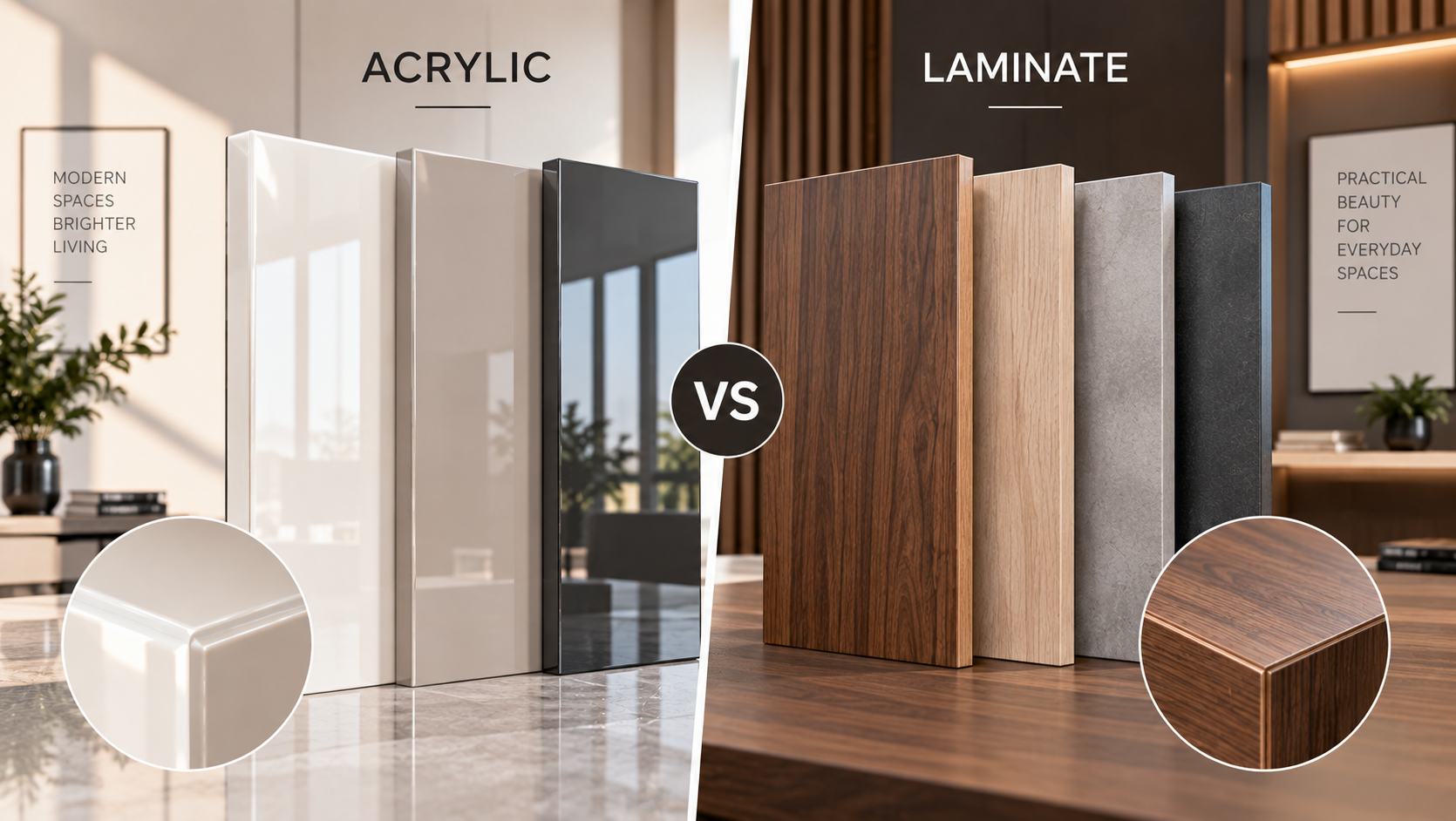 Acrylic vs Laminate: Cost, Finish, Durability and Best Uses
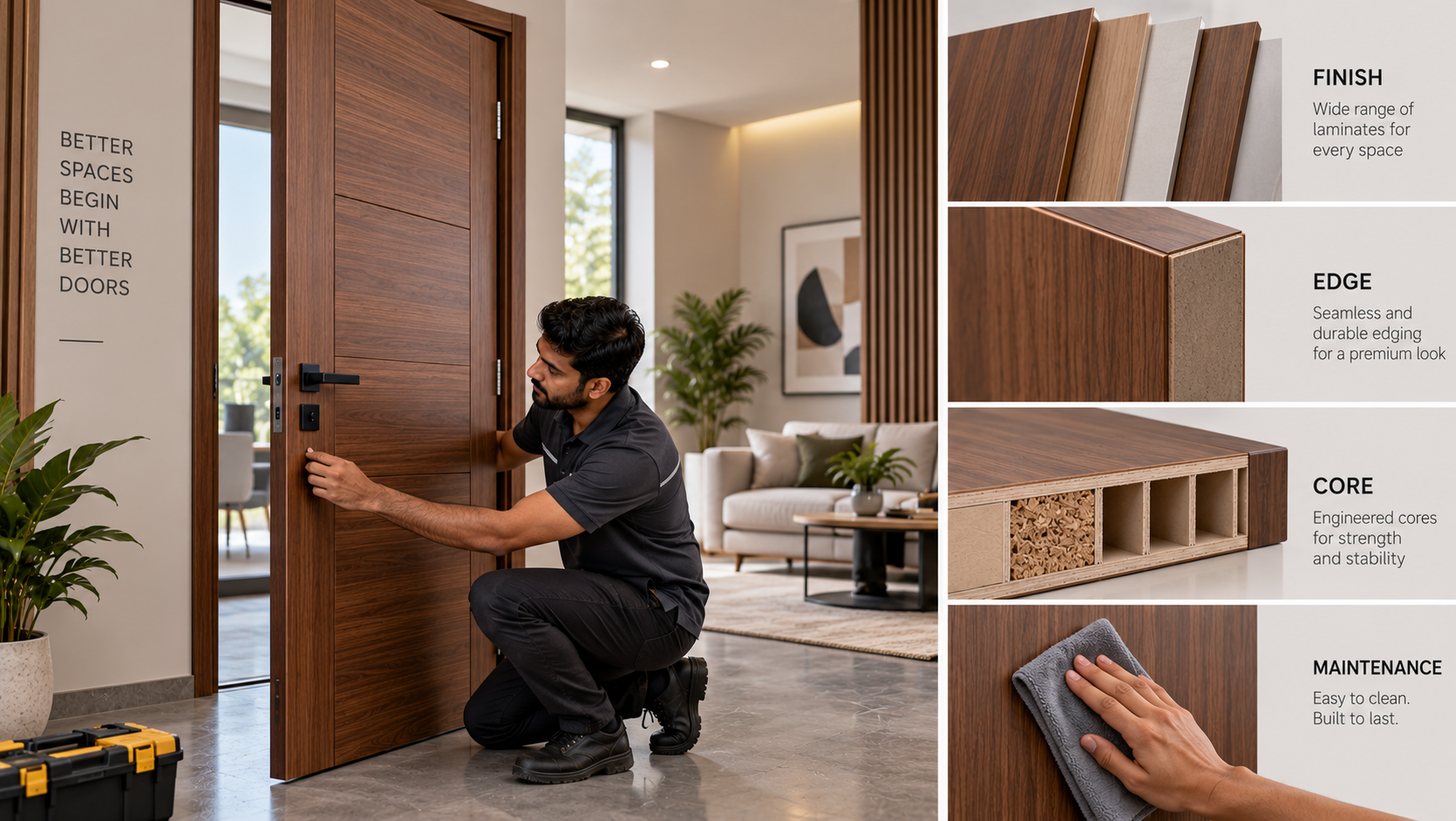 Modern Laminated Doors: Finish, Edge, Core and Maintenance Checklist
.png) Ply Manufacturer in India: Factory, Testing and Product Quality Checklist
Ply Manufacturer in India: Factory, Testing and Product Quality Checklist Door Manufacturer in India: Questions Architects and Builders Should Ask Before Ordering
.png) Calibrated Plywood Thickness Tolerance for CNC and Modular Furniture
Calibrated Plywood Thickness Tolerance for CNC and Modular Furniture Laminated Flush Door vs Membrane Door: Which Suits Each Room?
 Laminated Door Sizes and Thickness: A Specification Guide for Indian Projects
 1mm Laminate Sheet Price: What Affects the Cost Before You Buy?
 1mm Laminate Designs for Modern Interiors: Wood, Stone, Matte and High Gloss
 How to Choose 1mm Laminate for Kitchen Cabinets: Finish, Colour and Usage Guide