Posted on August 13, 2026
Learn how to choose 1mm laminate for kitchen cabinets. Compare matte, gloss, wood and solid finishes plus colours, substrate and usage factors.
A kitchen laminate has to do more than look attractive on the day it is installed. Kitchen cabinet shutters are opened repeatedly, cleaned often and positioned near cooking, washing and storage areas.
Choosing a 1mm laminate for kitchen cabinets therefore requires attention to finish, colour, substrate, fabrication and actual usage.
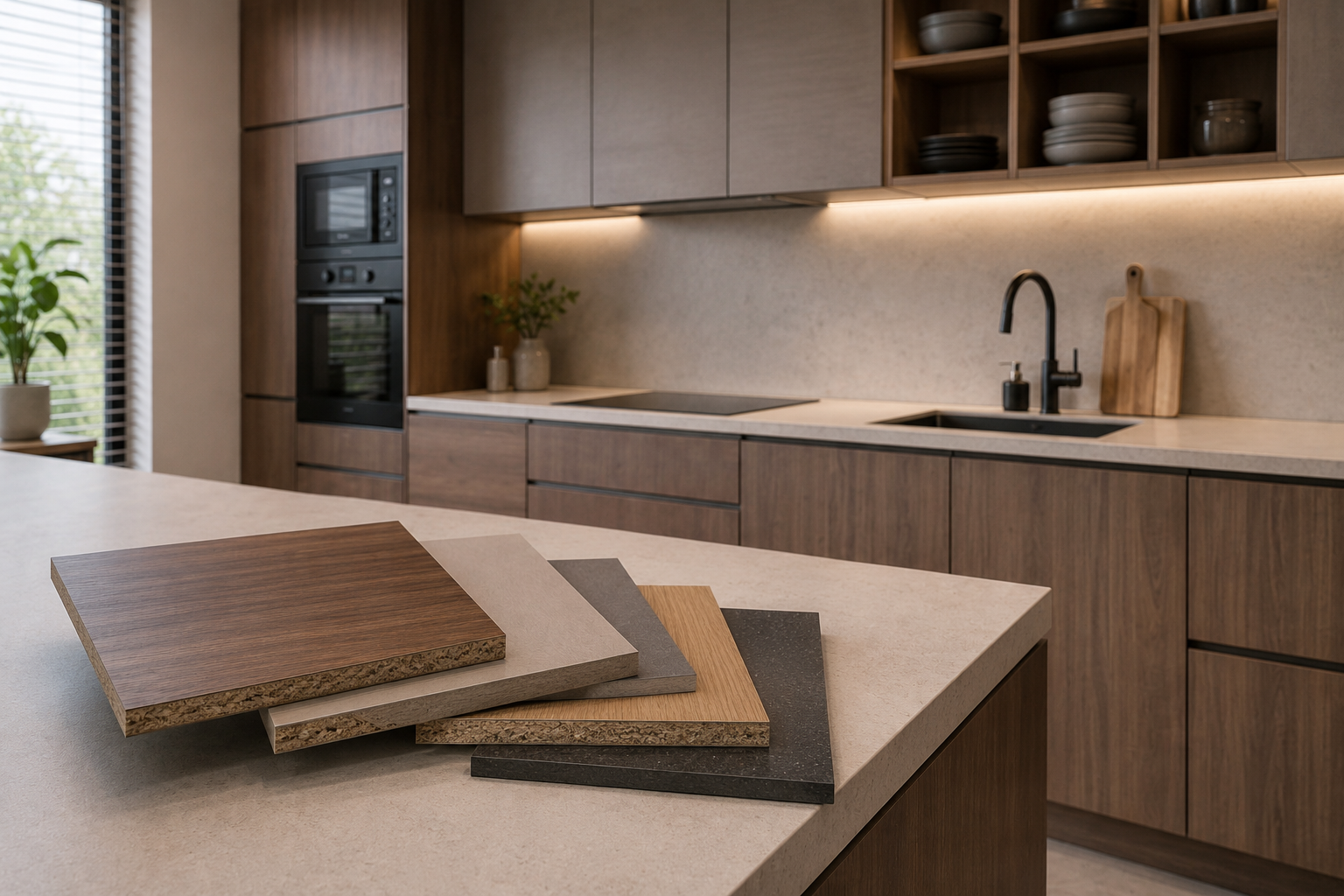
The Splice 1mm laminate collection includes wood, stone, matte, high-gloss, solid-colour and speciality designs that can be shortlisted for kitchen furniture.
A 1mm decorative laminate can be considered for kitchen cabinet shutters and visible furniture surfaces when it is properly applied to a suitable substrate.
The laminate is the decorative face. Performance also depends on:
Open or poorly finished edges around wet areas can create problems regardless of laminate thickness.
Matte laminates are useful for kitchens where a low-reflection and understated look is preferred.
They pair well with:
Matte surfaces can also reduce the visual prominence of everyday fingerprints compared with highly reflective dark surfaces, although performance differs by finish.
High-gloss surfaces reflect light and can make cabinetry appear brighter.
They are particularly popular in modern kitchens with simple shutter profiles.
Popular combinations include:
High-gloss surfaces should be evaluated under the actual lighting because reflections can significantly affect their appearance.
If you are considering a glossy kitchen, Splice also provides a detailed acrylic vs high-gloss laminate comparison.
Wood laminates can add warmth to kitchens that otherwise contain many hard surfaces such as tiles, stone and metal.
The Superstar catalogue includes multiple woodgrain families that can be paired with solids or stone-inspired finishes.
Consider woodgrains for:
Woodgrain does not have to be used across the entire kitchen. It often works well as a secondary finish.
Colour selection should account for kitchen size, lighting and countertop material.
Consider lighter neutrals, pale woodgrains and restrained colours.
Larger areas can handle deeper colours, stronger contrasts and feature finishes more comfortably.
A lighter cabinet finish can balance the visual weight.
Both dark and light cabinetry can work, depending on flooring and wall colour.
Use one colour for base cabinets and another for overhead units, or combine a solid colour with woodgrain.
The best combination is the one that coordinates all major fixed surfaces rather than choosing the laminate in isolation.
Not necessarily.
The visible exterior shutters usually carry the primary decorative scheme, while internal surfaces may follow a simpler specification based on the furniture design.
Discuss internal and external surfacing separately with the fabricator before ordering sheets.
A premium laminate cannot correct an unsuitable cabinet structure.
The base panel affects:
For a broader substrate comparison, read plywood vs MDF for kitchen cabinets from Splice Ply.
You can also explore the Splice plywood range when planning the complete furniture system.
Digital images are useful for shortlisting but not final colour approval.
Large wood and stone designs can look very different when seen at full scale.
A kitchen with several competing finishes can look visually disconnected.
Cabinet edges and hardware cut-outs require careful fabrication.
The least expensive sheet is not necessarily the best value for every application.
The Splicelam Superstar catalogue contains high-gloss, matte, woodgrain, stone and solid-colour options that can be coordinated across kitchen cabinets and adjoining furniture.
Use the Splice 1mm laminate product page to understand the range, then check the laminate catalogues and confirm the physical sample before ordering.
Yes, it can be considered for kitchen shutters and visible cabinetry when applied to a suitable substrate with proper fabrication and edge finishing.
Matte, gloss and woodgrain can all work. Choose according to lighting, cleaning expectations, colour palette and overall kitchen style.
Matte creates a restrained look and lower reflection. Gloss produces a brighter reflective appearance. The right choice depends on the design.
Yes. Woodgrain can be used throughout the cabinetry or as an accent alongside solid colours, gloss surfaces or stone countertops.
Ideally, review the laminate, countertop, flooring and wall colours together. These large surfaces influence one another visually.
 Acrylic vs Laminate: Cost, Finish, Durability and Best Uses
 Modern Laminated Doors: Finish, Edge, Core and Maintenance Checklist
.png) Ply Manufacturer in India: Factory, Testing and Product Quality Checklist
Ply Manufacturer in India: Factory, Testing and Product Quality Checklist Door Manufacturer in India: Questions Architects and Builders Should Ask Before Ordering
.png) Calibrated Plywood Thickness Tolerance for CNC and Modular Furniture
Calibrated Plywood Thickness Tolerance for CNC and Modular Furniture Residential vs Commercial Flush Doors: Performance and Specification Differences
 Laminated Flush Door vs Membrane Door: Which Suits Each Room?
 Laminated Door Sizes and Thickness: A Specification Guide for Indian Projects
 1mm Laminate Sheet Price: What Affects the Cost Before You Buy?
 1mm Laminate Designs for Modern Interiors: Wood, Stone, Matte and High Gloss