
Posted on September 16, 2026
Learn how to choose door manufacturer in india by comparing product range, sample approval, and lead time discipline, room use, finish options, and buyer chec
Selecting door manufacturer in india is less about slogans and more about consistency. The right supplier can explain the build, share samples, confirm documentation, and match the product to the project. Buyers should compare finish control, delivery discipline, and after-sales support before placing an order.
Related searches such as "flush door manufacturer in india", "membrane door", and "modern laminated doors" usually point to the same decision stage. Readers are trying to connect product type, finish choice, fabrication method, and supplier quality to a real project instead of collecting isolated terminology.
When someone searches for door manufacturer in india, they are usually close to a real buying or specification decision. A useful door manufacturer in india page should remove uncertainty, show what to compare, and help the reader move from broad research to a cleaner shortlist without depending on vague sales language.
The right application depends on what the product has to handle every day. Dry rooms often place more weight on finish and visual calm, while active areas shift the focus toward moisture resistance, structural stability, and ease of cleaning.
For this topic, think in terms of multi-door home orders, architect-led projects, commercial fit-outs, and builder schedules. Matching the material or door to the room reduces costly guesswork. It also stops the common mistake of selecting one specification for the whole project just because it looked convincing on a sample board.
A supplier should make the decision clearer, not foggier. The right vendor can explain the build in plain language, guide the sampling process, and put warranty or testing claims in writing. That matters more than broad marketing language when the order moves from enquiry to approval.
When you compare options, review product consistency, sample handling, availability, and after-sales support together. Price still matters, but unclear documentation often costs more later. A disciplined supplier conversation protects timelines as much as it protects quality.
A supplier should make the decision clearer, not foggier. The right vendor can explain the build in plain language, guide the sampling process, and put warranty or testing claims in writing. That matters more than broad marketing language when the order moves from enquiry to approval.
When you compare options, review product consistency, sample handling, availability, and after-sales support together. Price still matters, but unclear documentation often costs more later. A disciplined supplier conversation protects timelines as much as it protects quality.
Construction tells you how door manufacturer is likely to behave once it is installed. Look beyond the visible face and check the core, the edge quality, the pressing or bonding consistency, and how neatly the sample has been finished. A smooth surface does not always mean the build below it is dependable.
That is especially important when the application involves multi-door home orders, architect-led projects, commercial fit-outs, and builder schedules. In those situations, the hidden structure affects flatness, screw holding, finish quality, and service life. A buyer who studies the edge and back of a sample usually learns more than someone who judges the front face alone.
Finish choices shape both the look and the maintenance routine. Flush doors, laminated doors, skin-finished doors, and project-specific door sets can all work, but they do not age or clean the same way. A surface that looks sharp under showroom lighting may behave very differently once fingerprints, scratches, or side lighting become everyday factors.
The safest sequence is to lock the base build first, then shortlist finishes that suit the room. That order keeps design enthusiasm from overriding performance checks, and it helps buyers choose a finish that feels right beyond the first week of installation.
A supplier should make the decision clearer, not foggier. The right vendor can explain the build in plain language, guide the sampling process, and put warranty or testing claims in writing. That matters more than broad marketing language when the order moves from enquiry to approval.
When you compare options, review product consistency, sample handling, availability, and after-sales support together. Price still matters, but unclear documentation often costs more later. A disciplined supplier conversation protects timelines as much as it protects quality.
A supplier should make the decision clearer, not foggier. The right vendor can explain the build in plain language, guide the sampling process, and put warranty or testing claims in writing. That matters more than broad marketing language when the order moves from enquiry to approval.
When you compare options, review product consistency, sample handling, availability, and after-sales support together. Price still matters, but unclear documentation often costs more later. A disciplined supplier conversation protects timelines as much as it protects quality.
A supplier should make the decision clearer, not foggier. The right vendor can explain the build in plain language, guide the sampling process, and put warranty or testing claims in writing. That matters more than broad marketing language when the order moves from enquiry to approval.
When you compare options, review product consistency, sample handling, availability, and after-sales support together. Price still matters, but unclear documentation often costs more later. A disciplined supplier conversation protects timelines as much as it protects quality.
A supplier should make the decision clearer, not foggier. The right vendor can explain the build in plain language, guide the sampling process, and put warranty or testing claims in writing. That matters more than broad marketing language when the order moves from enquiry to approval.
When you compare options, review product consistency, sample handling, availability, and after-sales support together. Price still matters, but unclear documentation often costs more later. A disciplined supplier conversation protects timelines as much as it protects quality.
A supplier should make the decision clearer, not foggier. The right vendor can explain the build in plain language, guide the sampling process, and put warranty or testing claims in writing. That matters more than broad marketing language when the order moves from enquiry to approval.
When you compare options, review product consistency, sample handling, availability, and after-sales support together. Price still matters, but unclear documentation often costs more later. A disciplined supplier conversation protects timelines as much as it protects quality.
A supplier should make the decision clearer, not foggier. The right vendor can explain the build in plain language, guide the sampling process, and put warranty or testing claims in writing. That matters more than broad marketing language when the order moves from enquiry to approval.
When you compare options, review product consistency, sample handling, availability, and after-sales support together. Price still matters, but unclear documentation often costs more later. A disciplined supplier conversation protects timelines as much as it protects quality.
|
What to check |
Why it matters |
Question to ask |
|
Sample quality |
A good sample reveals finish control, consistency, and edge treatment |
Can you show the exact sample or nearest batch match for this requirement? |
|
Written documentation |
Written proof keeps claims traceable during purchase and service |
What specification, testing, or warranty note can you share in writing? |
|
Batch consistency |
Large projects fail when the first sample and delivered material behave differently |
How do you keep the finish and build consistent across batches? |
|
Availability and lead time |
A correct product can still hurt the project if supply is unreliable |
What is the realistic lead time and how do you handle repeat orders? |
|
After-sales response |
Support matters once installation, replacements, or clarifications are needed |
Who supports the order after dispatch and how quickly can issues be handled? |
Ask about sample quality, written specifications, availability, consistency across batches, and how support works after dispatch.
Only if the project is repeating a fully proven specification. For new work, a sample or prior approved benchmark reduces avoidable surprises.
Yes. Clear warranty wording shows how seriously the supplier treats traceability and service, even when you hope the claim is never needed.
Not if documentation, finish control, or delivery discipline are weak. A low quote can become expensive when replacements or delays begin.
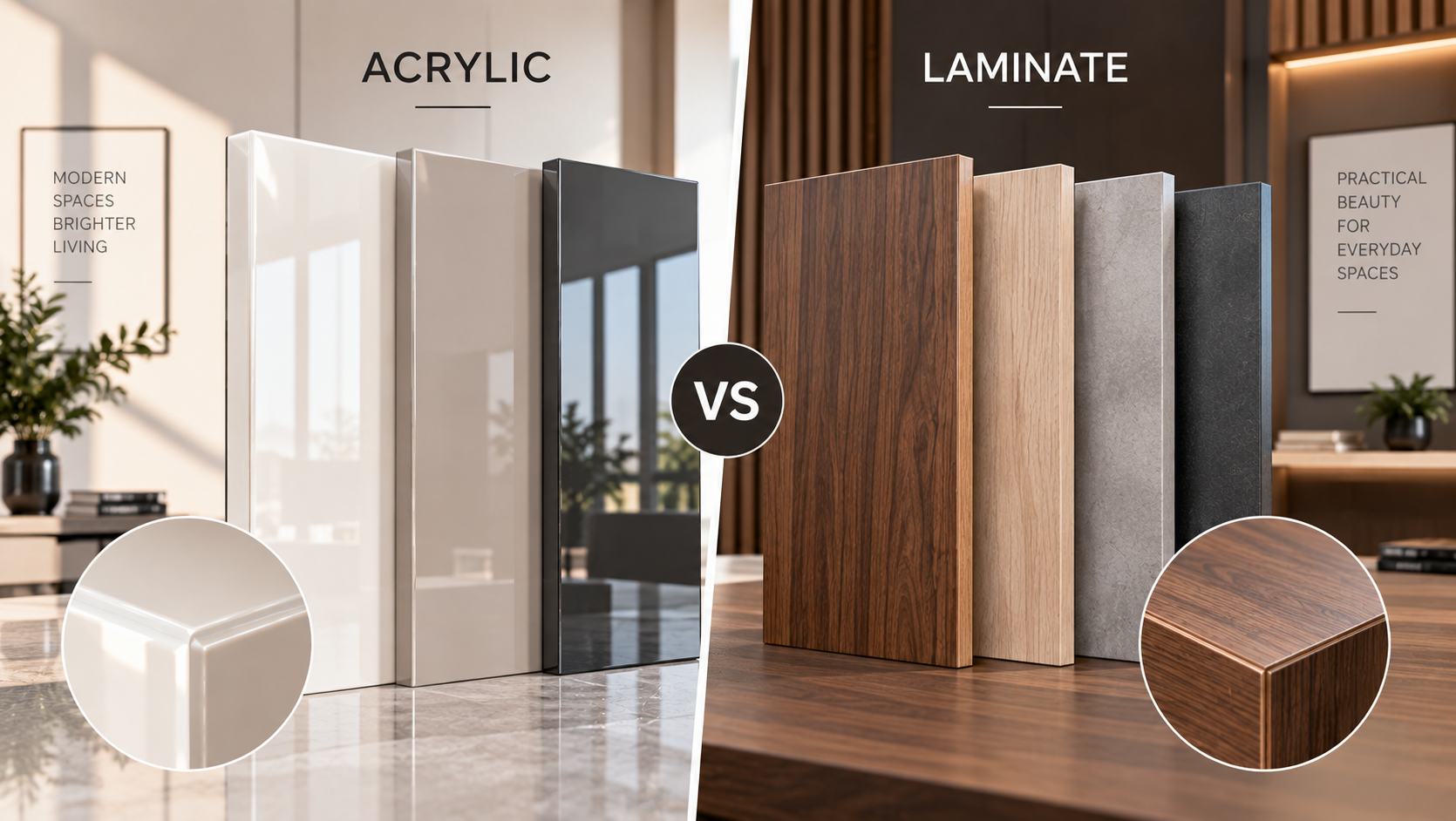 Acrylic vs Laminate: Cost, Finish, Durability and Best Uses
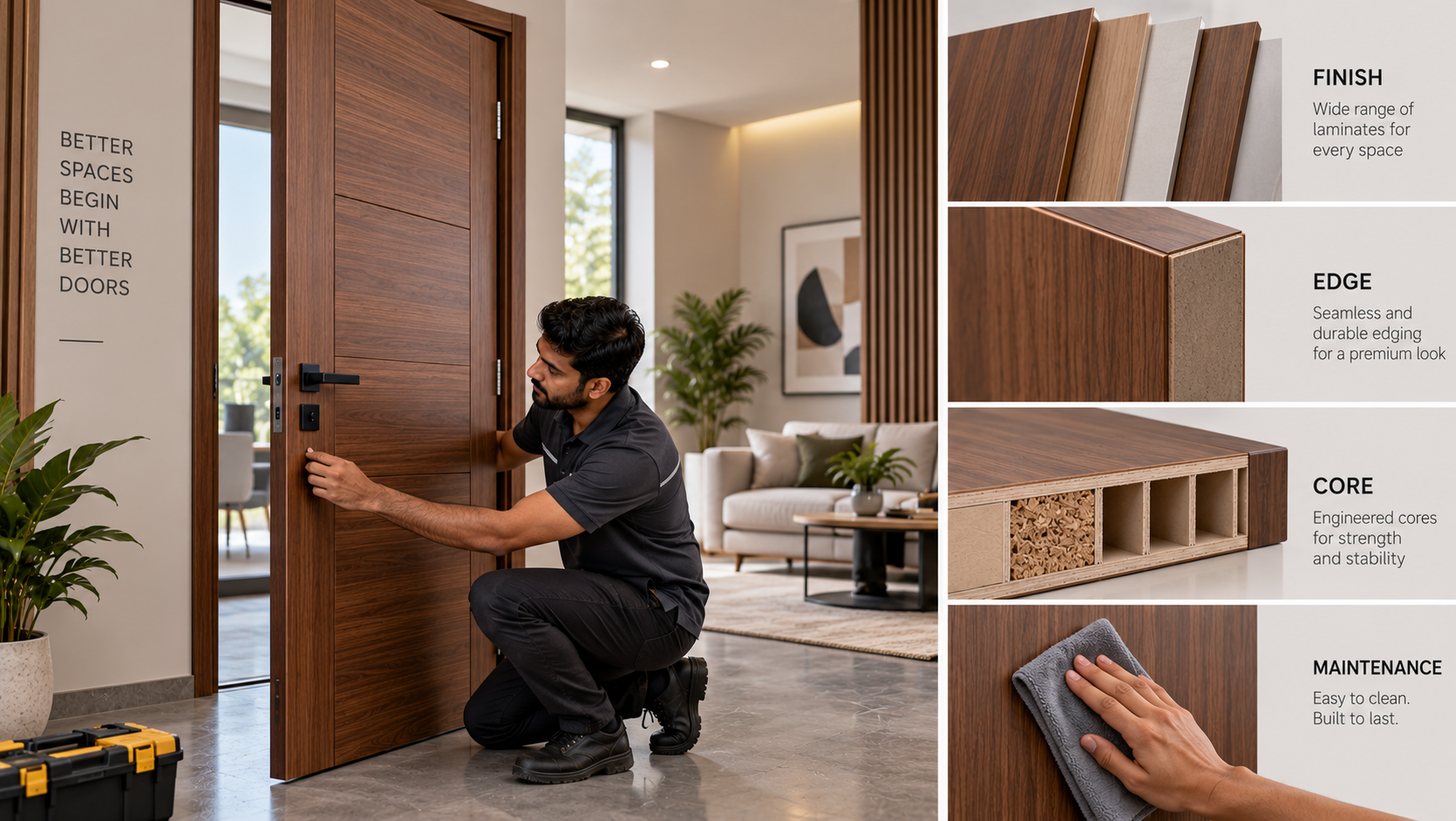 Modern Laminated Doors: Finish, Edge, Core and Maintenance Checklist
.png) Ply Manufacturer in India: Factory, Testing and Product Quality Checklist
Ply Manufacturer in India: Factory, Testing and Product Quality Checklist.png) Calibrated Plywood Thickness Tolerance for CNC and Modular Furniture
Calibrated Plywood Thickness Tolerance for CNC and Modular Furniture Residential vs Commercial Flush Doors: Performance and Specification Differences
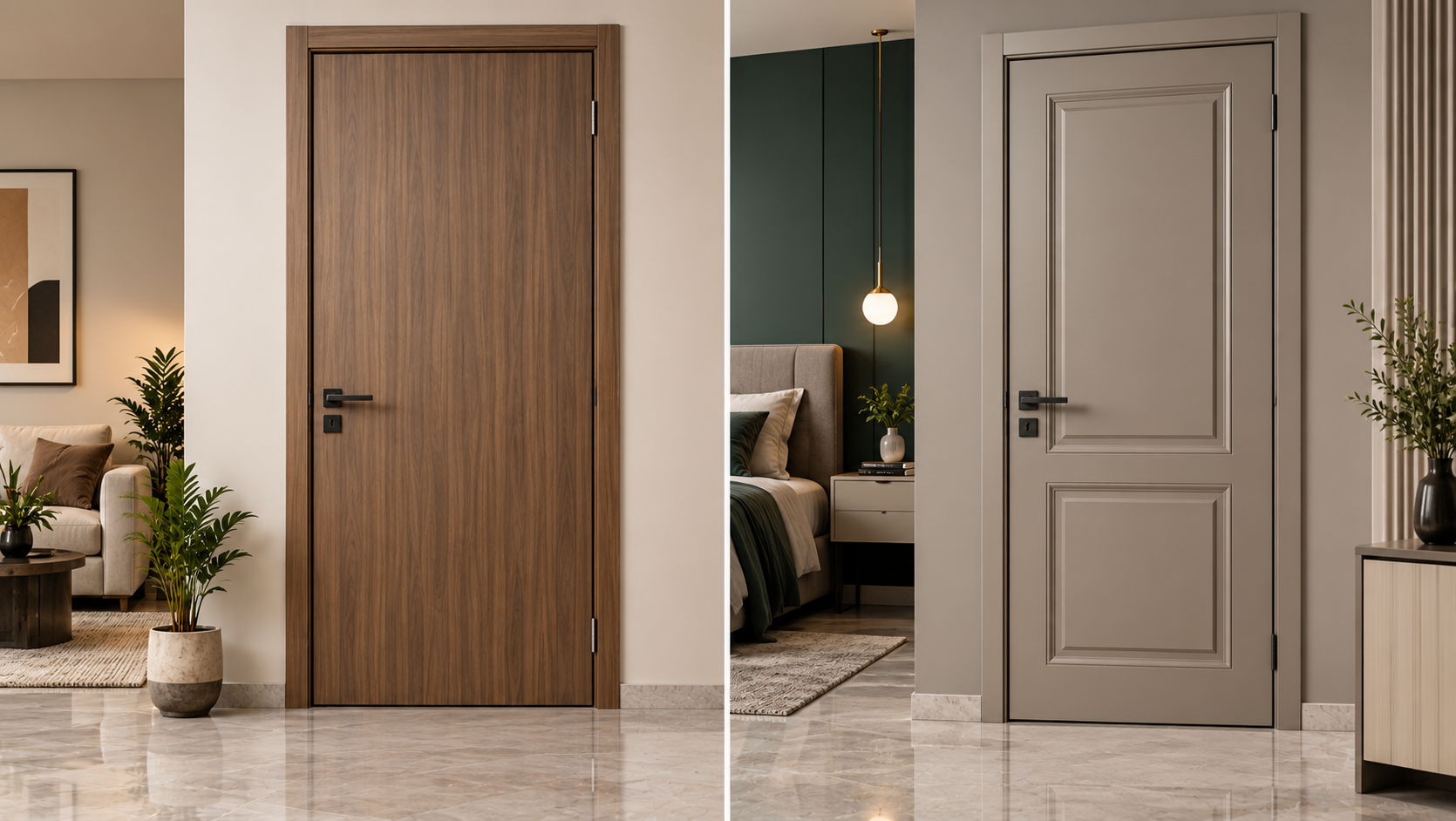 Laminated Flush Door vs Membrane Door: Which Suits Each Room?
 Laminated Door Sizes and Thickness: A Specification Guide for Indian Projects
 1mm Laminate Sheet Price: What Affects the Cost Before You Buy?
 1mm Laminate Designs for Modern Interiors: Wood, Stone, Matte and High Gloss
 How to Choose 1mm Laminate for Kitchen Cabinets: Finish, Colour and Usage Guide