Posted on July 22, 2026
Compare laminate and veneer for furniture by appearance, durability, maintenance, repair, cost and application before choosing your finish.
Laminate is better for furniture that needs easy maintenance, consistent colour and good resistance to everyday stains and abrasion. Veneer is better when the client wants the depth, grain variation and ageing character of real wood. Both are surface materials, so their performance also depends on the plywood or board below them and the quality of fabrication.
For a busy kitchen, children's study or rental property, laminate is often the practical answer. For a formal living room, executive desk or premium feature panel, veneer may justify its additional care and finishing cost. Many interiors use both: laminate in high-use zones and veneer on selected focal pieces.
What is laminate?
Decorative laminate is an engineered surface made by pressing kraft paper, decorative paper and a protective overlay with resin under controlled heat and pressure. Manufacturers offer it in solid colours, woodgrains, stone looks, abstracts, matte finishes, gloss and textures.
The printed decorative layer makes colour and pattern more consistent from sheet to sheet than natural veneer. Laminate is normally bonded to plywood, MDF or another compatible substrate with adhesive. It is not the structural core of ordinary furniture.
High-pressure decorative laminate is popular because it arrives as a finished surface. It does not require the sanding, staining and polishing cycle associated with natural wood veneer.
What is veneer?
Wood veneer is a thin slice of natural timber bonded to a substrate. Because it comes from a tree, every sheet carries genuine grain, figure and colour variation. Even sheets cut from the same log can look different after finishing.
Veneer usually requires sanding, staining if specified, sealer and a protective topcoat. The selected polish affects final colour, sheen, scratch behaviour and maintenance. Book matching, slip matching and grain direction can create different visual results from the same veneer species.
Veneer provides natural material character, but that character needs skilled selection and workmanship. Poor matching or an uneven stain can be difficult to hide.
Laminate vs veneer comparison
|
Factor |
Laminate |
Veneer |
|
Material |
Engineered decorative surface |
Thin layer of natural wood |
|
Appearance |
Consistent colour and repeatable pattern |
Natural variation and unique grain |
|
Finish on site |
Usually ready to use after bonding and edge finishing |
Requires sanding and protective coating |
|
Scratch and stain resistance |
Product dependent; generally practical for daily use |
Depends heavily on the topcoat |
|
Repair |
Deep chips are difficult to disguise |
Can sometimes be sanded and refinished |
|
Maintenance |
Wipe with a soft damp cloth |
Needs care appropriate to the polish system |
|
Colour stability |
Usually more predictable |
Can change with light, age and finishing |
|
Cost |
Broad range, usually economical for large areas |
Material selection and skilled finishing increase cost |
|
Best use |
Kitchens, wardrobes, desks and frequent-use furniture |
Feature walls, premium furniture and focal surfaces |
|
Sustainability question |
Paper, resin and manufacturing impact must be assessed |
Uses thin wood slices efficiently, but species and sourcing matter |
Which finish looks better?
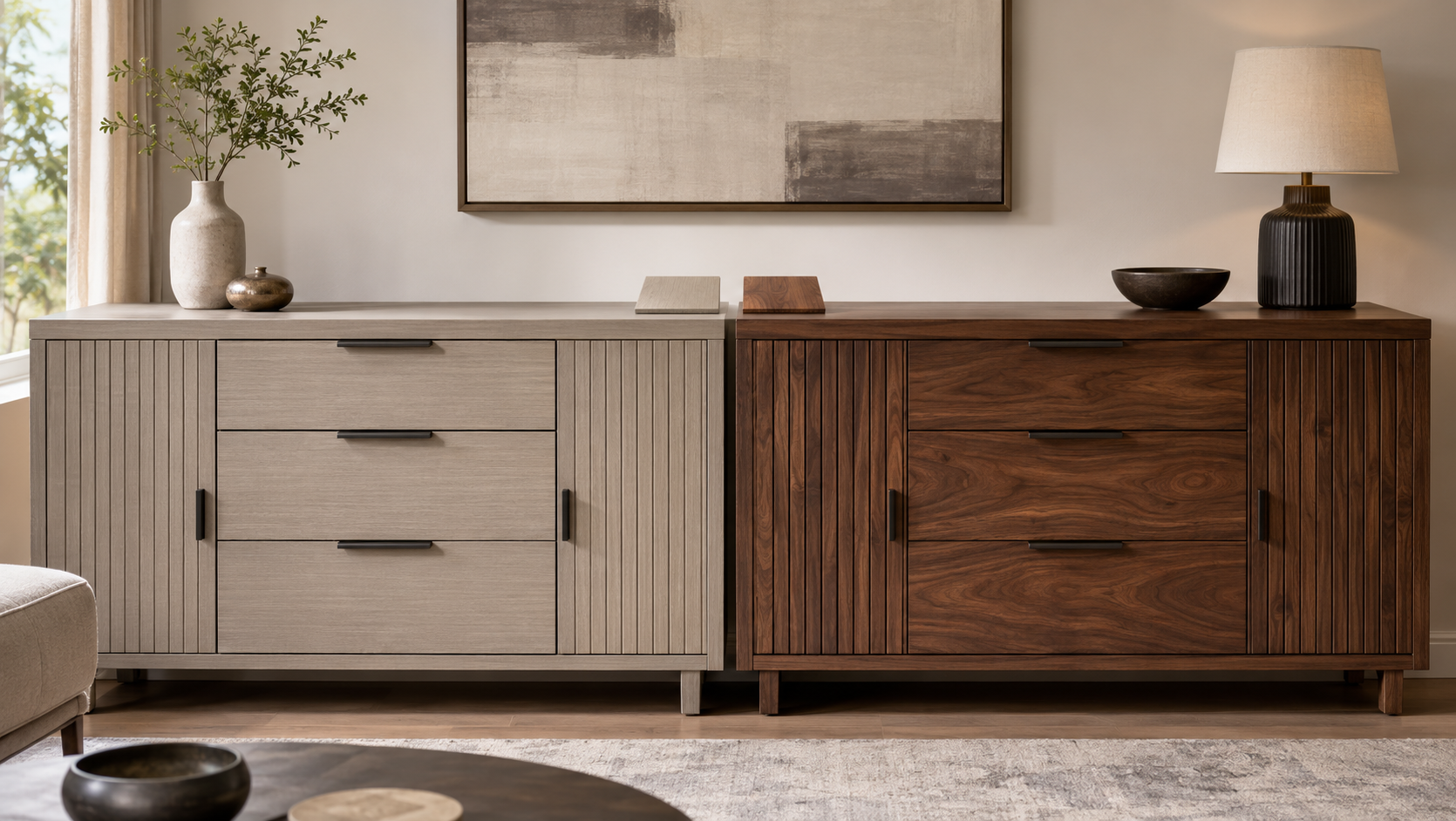
Veneer has the visual depth of real wood. Light catches the grain differently across the surface, and small variations make each panel distinct. This suits furniture where natural material is part of the design brief.
Laminate gives tighter control over the final look. The approved sample is generally close to the installed surface, subject to batch and screen differences. Designers can repeat the same woodgrain or colour across multiple rooms without sorting many natural leaves.
The better finish depends on the purpose. A natural irregularity that makes veneer attractive may look like mismatch to someone expecting uniform cabinet shutters. A repeatable laminate pattern may look too controlled to a client who wants authentic timber character.
Which is more durable?
For routine domestic use, a good high-pressure decorative laminate is often easier to live with. It resists common stains and abrasion according to its product specification, and the finished face does not need periodic polishing. It is well suited to desks, wardrobe shutters, kitchen cabinets and storage units.
Veneer's durability depends on its protective coating. A good two-component or other suitable coating can provide useful protection, but the surface may still scratch or fade. Direct sunlight can alter the colour of natural wood over time.
Neither finish protects a weak substrate or an open edge from water. A spill that reaches a joint can damage the base panel regardless of the decorative face.
Which is easier to maintain?
Laminate usually needs only regular dusting and wiping with a soft damp cloth. Grease should be removed with a mild cleaner approved by the manufacturer. Abrasive powders and steel scrubbers can scratch or dull the surface.
Veneer should be cleaned according to its topcoat. Too much water, harsh chemicals or silicone-heavy polish can affect the finish. Scratches may sometimes be repaired by a skilled polisher, but spot repairs can show under certain lighting.
For a household that wants minimal maintenance, laminate has the advantage. Veneer suits owners who accept that natural surfaces develop character and may need refinishing.
Which costs more?
Laminate is generally more economical for large furniture areas because the decorative sheet is factory finished. Cost varies with thickness, finish, texture and collection.
Veneer cost includes the natural leaf, matching, wastage, adhesive, sanding, stain, coating and skilled labour. Premium species and complex matching raise the price. Future refinishing should also be considered.
Compare the complete installed cost. A low sheet rate does not include edge work, substrate, hardware or labour.
Best finish by furniture application
Modular kitchen
Laminate is the practical choice for most shutters and panels because it handles frequent wiping and offers consistent replacement options. Use a moisture-appropriate plywood core in wet zones. Veneer can appear on a dry breakfast counter or selected tall unit, but it needs protection from heat, grease and water.
Wardrobe
Laminate works well on wardrobe exteriors and interiors. Woodgrain laminates give a timber look without the colour variation of veneer. Veneer is appropriate for a premium master-bedroom wardrobe when natural grain is central to the design.
TV unit
Both can work. Laminate suits drawers, shelves and frequently touched panels. Veneer can create a refined focal backdrop. Keep ventilation gaps around electronics and protect either finish from heat.
Study table and home office
Laminate is often the better desktop finish because of daily contact with laptops, stationery and drinks. Veneer can be used on fascia panels or executive furniture where its appearance justifies more careful use.
Commercial furniture
Laminate is commonly preferred for workstations, retail counters and hospitality casework because colour is repeatable and maintenance is straightforward. Veneer may be used in reception areas or boardrooms as an accent.
Can laminate look like real wood?
Modern woodgrain laminates reproduce colour, pore patterns and texture with increasing detail. They give a convincing wood-inspired surface, particularly when grain direction and edge finish are planned well. They do not become natural wood, and the pattern will repeat across sheets.
Use large samples to check pattern scale. A small swatch may not reveal obvious repeats. Align grain direction across adjacent shutters and drawers so the composition looks intentional.
Why choose Splice Laminates for furniture?
Splice Lam includes solid colours, woodgrains, patterns, matte, gloss and other decorative surfaces for residential and commercial furniture. Collections such as Impresso and Urban Reality give designers options for consistent large-area applications. Splice Reflect Acrylic is available when the brief calls for a deeper, mirror-like gloss rather than a conventional laminate look.
The decorative face should sit on the right core. Splice Ply offers plywood grades for dry and moisture-prone interior applications, allowing the furniture maker to select the core according to load and exposure. A calibrated plywood surface can support more uniform bonding and alignment.
Review a physical sample and current technical sheet before ordering. Confirm laminate thickness, surface code, size, batch and intended application. For plywood, confirm the exact product name, IS grade and warranty conditions.
Decision checklist
Frequently asked questions
Is laminate better than veneer?
Laminate is better for easy maintenance, consistent design and high-use furniture. Veneer is better for natural wood character and premium custom finishes.
Which lasts longer, laminate or veneer?
Both can last for years when properly installed. Laminate usually handles everyday abrasion and stains more easily. Veneer can sometimes be refinished, so its usable life depends on the veneer thickness and coating condition.
Is laminate cheaper than veneer?
Laminate is usually cheaper after accounting for veneer matching, polishing and labour. Premium laminate and economical veneer ranges can narrow the gap.
Can veneer be used in a kitchen?
It can be used selectively in dry kitchen areas with a suitable protective coating. Laminate is generally easier to maintain around grease, splashes and frequent cleaning.
Which is better for wardrobes?
Laminate suits most wardrobes because it is consistent and easy to clean. Veneer suits premium wardrobes where natural grain is the design priority.
Final recommendation
Choose by use, not by showroom appearance alone. Laminate is the dependable choice for busy furniture and large repeatable surfaces. Veneer is a considered choice for natural, individual character. Splice Lam paired with a suitable Splice plywood core gives homeowners a practical route to durable, coordinated furniture without sacrificing design variety. For room-specific inspiration, explore these creative ways to use laminates.
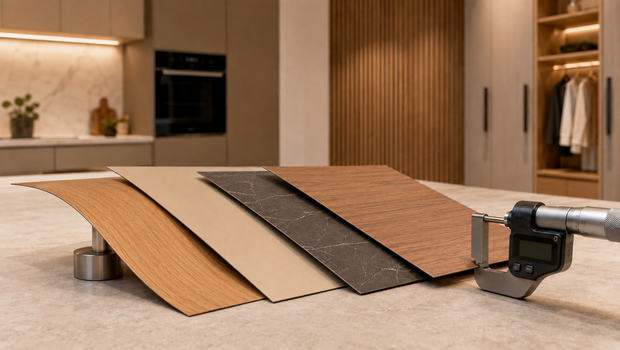 Laminate sheet thickness guide: 0.8 mm, 1 mm and more
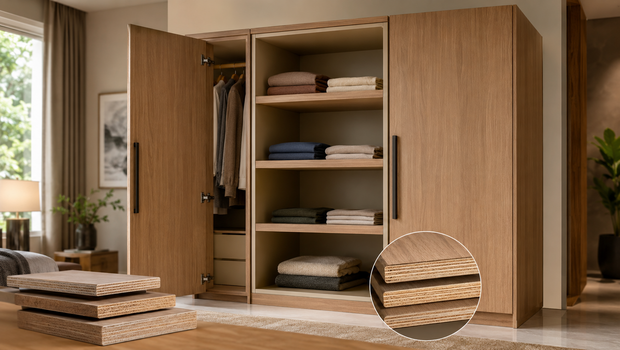 Best plywood thickness for wardrobes, shelves and shutters
 Plywood vs MDF for kitchen cabinets: Which is better?
 Modern Laminated Doors: Finish, Edge, Core and Maintenance Checklist
.png) Shuttering Plywood Buying Guide: Strength, Reuse, Thickness & Cost Factors
Shuttering Plywood Buying Guide: Strength, Reuse, Thickness & Cost Factors.png) Waterproof Doors for Bathrooms Kitchens & Balconies What Should You Check?
Waterproof Doors for Bathrooms Kitchens & Balconies What Should You Check?.png) Best Laminate Finish for Wardrobes: Matte, Gloss, Texture or Acrylic?
Best Laminate Finish for Wardrobes: Matte, Gloss, Texture or Acrylic? Acrylic Laminate for Kitchen Cabinets: Pros, Cons, Cost & Maintenance
 The Ultimate Guide: Which Plywood is Best for Furniture?
 Splice Ply: The Ultimate Plywood Manufacturer in India for Durable Interiors