.png)
Posted on June 18, 2026
Learn how to choose waterproof doors for bathrooms, kitchens and balconies. Check grade, core, adhesive, finish, edge sealing and maintenance.
Bathrooms, kitchens and balconies are exposed to moisture, steam, water splashes and humidity. That is why choosing the right waterproof doors is important for long-term durability. A normal door may swell, bend, peel or lose strength when used in wet areas without proper protection.
Whether you are building a new home or renovating an existing space, the door should be selected based on its core material, water resistance, adhesive quality, surface finish and edge protection. This guide explains what you should check before buying waterproof doors for bathrooms, kitchens and balconies.
Moisture is one of the biggest reasons behind door damage. In bathrooms, doors are exposed to water splashes and steam. In kitchens, they face heat, humidity, oil and cleaning moisture. Balcony doors may face rain, sunlight and changing weather conditions.
A waterproof door helps reduce the risk of swelling, warping, surface peeling and fungal damage. It also improves the life of the door and reduces maintenance costs.
For moisture-prone spaces, you can explore Splice Ply doors designed for different residential and commercial applications.
A waterproof door is not just about the outer surface. The internal core, adhesive and edge sealing also matter. If the surface is moisture-resistant but the edges are not sealed properly, water can still enter and damage the door.
Important features to check include:
A good waterproof flush door or laminated door should protect both the surface and internal structure.
Bathrooms require doors that can handle regular water exposure and steam. A bathroom door should not swell or bend easily. It should also be easy to clean and resistant to moisture-related damage.
Before choosing waterproof doors for bathroom use, check whether the door has a water-resistant core and sealed edges. Also, select good-quality hinges and hardware that do not rust easily.
Best features for bathroom doors:
You can also consider Splice Ply flush doors for practical interior applications.
Kitchen doors face a different type of exposure. They may not receive direct water splashes like bathroom doors, but they are exposed to steam, oil, heat and cleaning moisture. This makes moisture resistance important.
A waterproof kitchen door should be durable, stain-resistant and easy to maintain. Laminated doors can be a good choice because the laminate surface is simple to wipe and available in many finishes.
For a finished and stylish option, explore Splice Ply laminated doors.
Balcony doors need stronger protection because they may be exposed to rain, sunlight and outdoor weather. Not every interior door is suitable for balcony use. If the door is directly exposed to rain, choose a product that can handle exterior conditions.
Check for weather resistance, strong core material, proper finishing and good edge sealing. Also, ensure the frame is compatible with the door. A strong door with a weak frame may still create long-term problems.
| Factor | Why It Matters |
|---|---|
| BWP Grade | Improves water resistance |
| Waterproof Adhesive | Helps prevent swelling |
| Edge Sealing | Stops moisture from entering |
| Surface Finish | Makes cleaning easier |
| Termite Resistance | Improves door life |
| Correct Thickness | Adds strength and stability |
| Hardware Quality | Prevents rust and loose fitting |
Many buyers select waterproof doors only by design. This can lead to problems later. A door may look beautiful, but if the core is weak or the edges are not sealed, it may not perform well in wet areas.
Avoid these mistakes:
Good installation is as important as good material. Even the best waterproof door can fail if not installed correctly.
Waterproof doors are easier to maintain, but they still need basic care. Wipe water splashes regularly, especially near the bottom edge. Avoid harsh chemicals and abrasive cleaning pads. If the door has a laminate finish, clean it with a soft cloth and mild cleaner.
Also, check hinges, locks and edges from time to time. If you notice peeling or gaps, get them repaired early to prevent moisture entry.
Splice Ply offers a range of flush doors, laminated doors and designer doors for homes, offices and commercial spaces. Whether you need a bathroom door, kitchen door or balcony door, Splice Ply provides practical options that combine durability with design.
For product details, explore the Splice Ply catalogue or contact the team through the Splice Ply contact page.
1. Which door is best for bathrooms?
A moisture-resistant or waterproof door with proper edge sealing is best for bathrooms.
2. Are waterproof doors fully water-resistant?
They are designed to resist moisture, but proper installation and edge protection are important.
3. Can laminated doors be used in kitchens?
Yes, laminated doors can be used in kitchens because they are easy to clean and available in many finishes.
4. Which door is best for balconies?
A strong weather-resistant door with proper finishing and edge sealing is best for balconies.
5. How do you maintain waterproof doors?
Wipe water regularly, avoid harsh cleaners, check edges and use rust-resistant hardware.
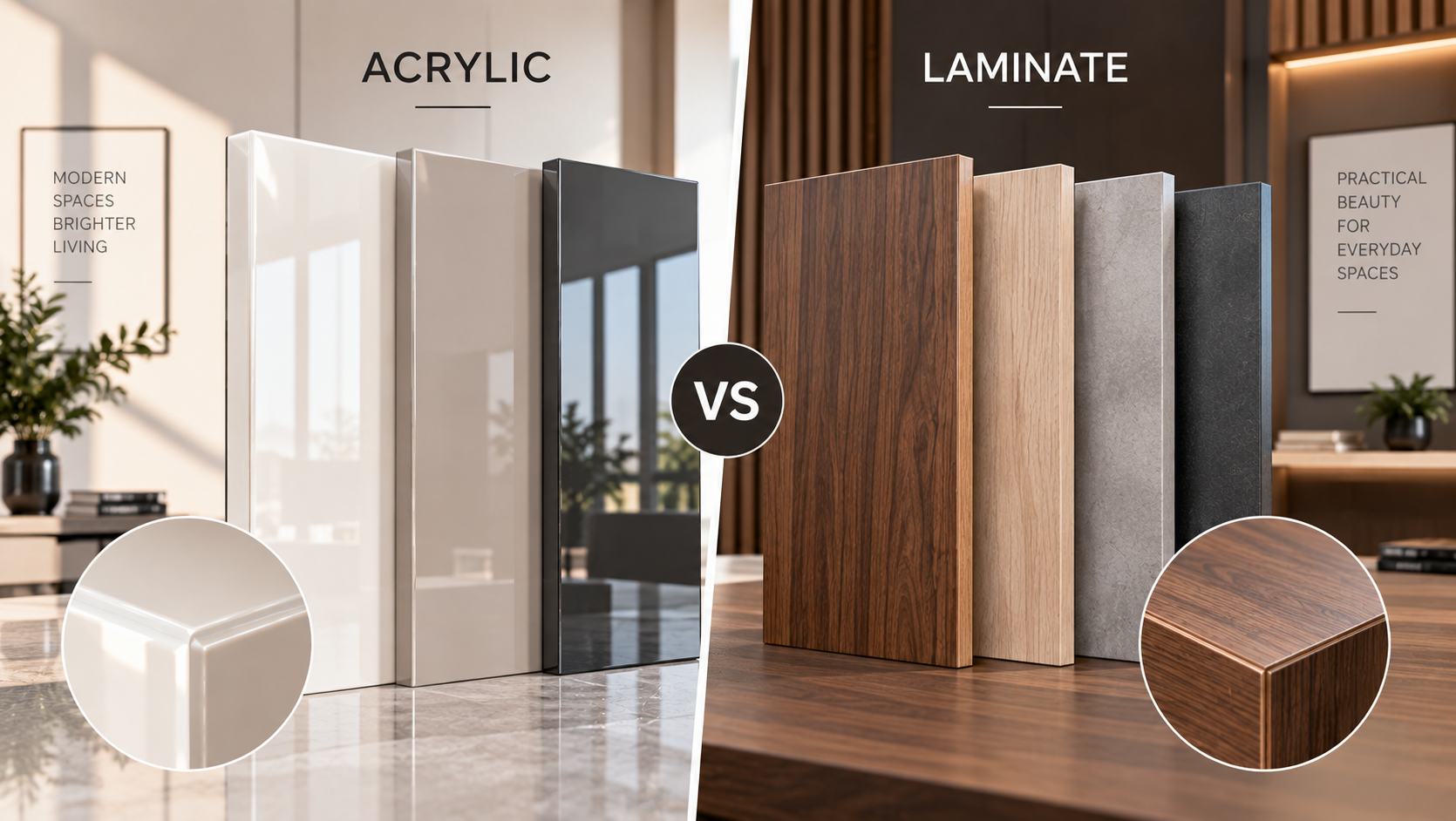 Acrylic vs Laminate: Cost, Finish, Durability and Best Uses
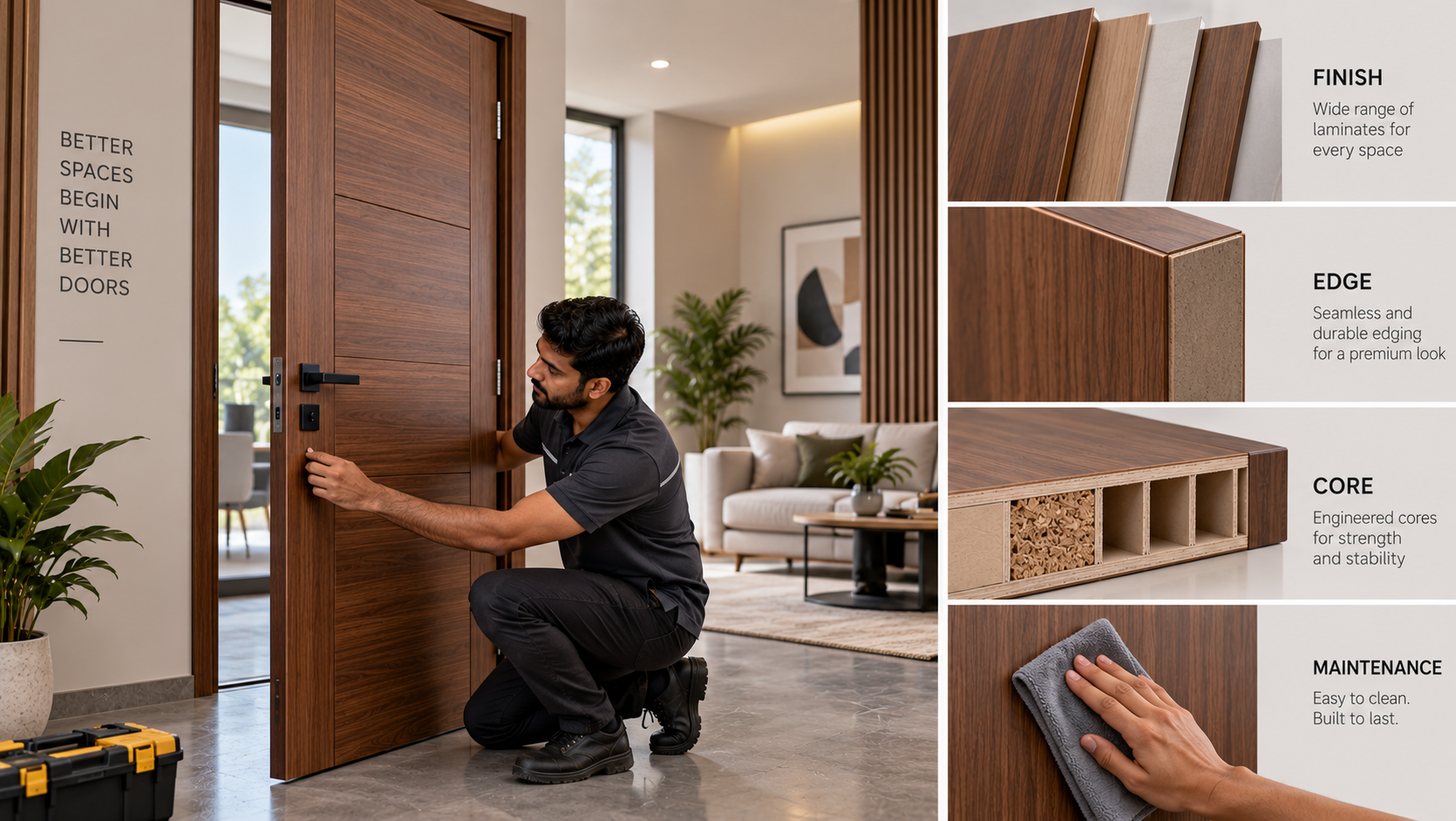 Modern Laminated Doors: Finish, Edge, Core and Maintenance Checklist
.png) Ply Manufacturer in India: Factory, Testing and Product Quality Checklist
Ply Manufacturer in India: Factory, Testing and Product Quality Checklist Door Manufacturer in India: Questions Architects and Builders Should Ask Before Ordering
.png) Calibrated Plywood Thickness Tolerance for CNC and Modular Furniture
Calibrated Plywood Thickness Tolerance for CNC and Modular Furniture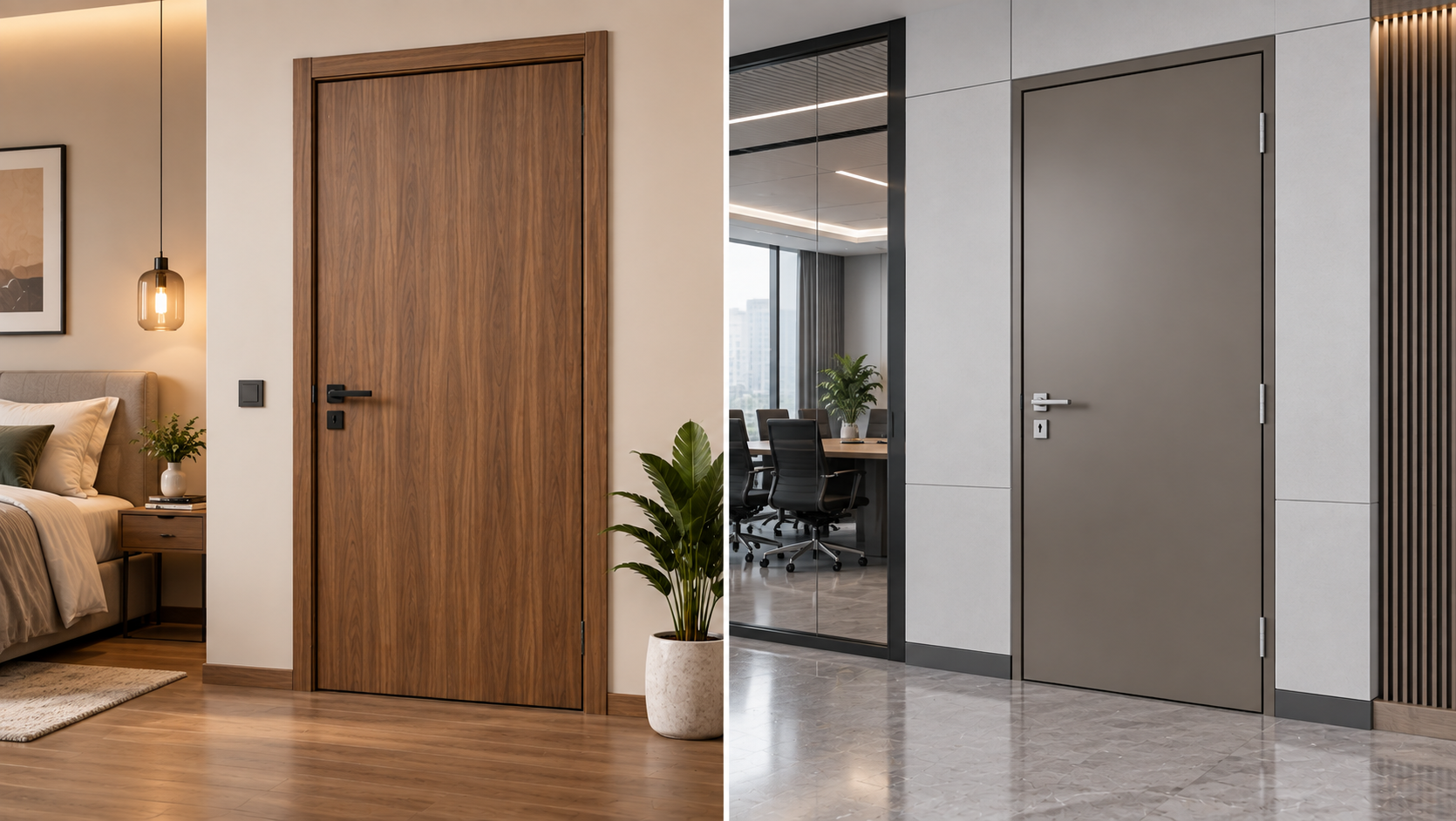 Residential vs Commercial Flush Doors: Performance and Specification Differences
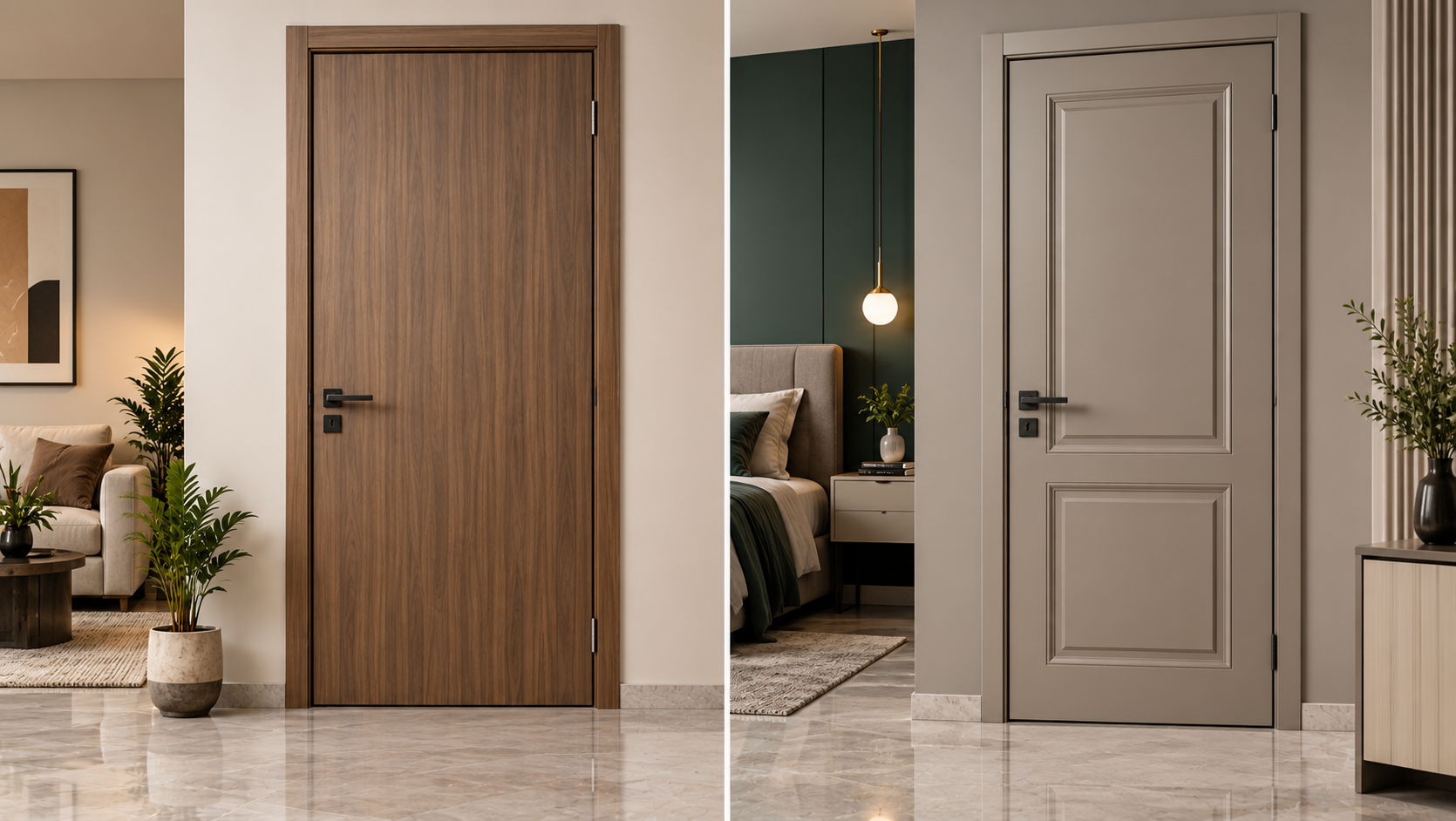 Laminated Flush Door vs Membrane Door: Which Suits Each Room?
 Laminated Door Sizes and Thickness: A Specification Guide for Indian Projects
 1mm Laminate Sheet Price: What Affects the Cost Before You Buy?
 1mm Laminate Designs for Modern Interiors: Wood, Stone, Matte and High Gloss