Posted on August 13, 2026
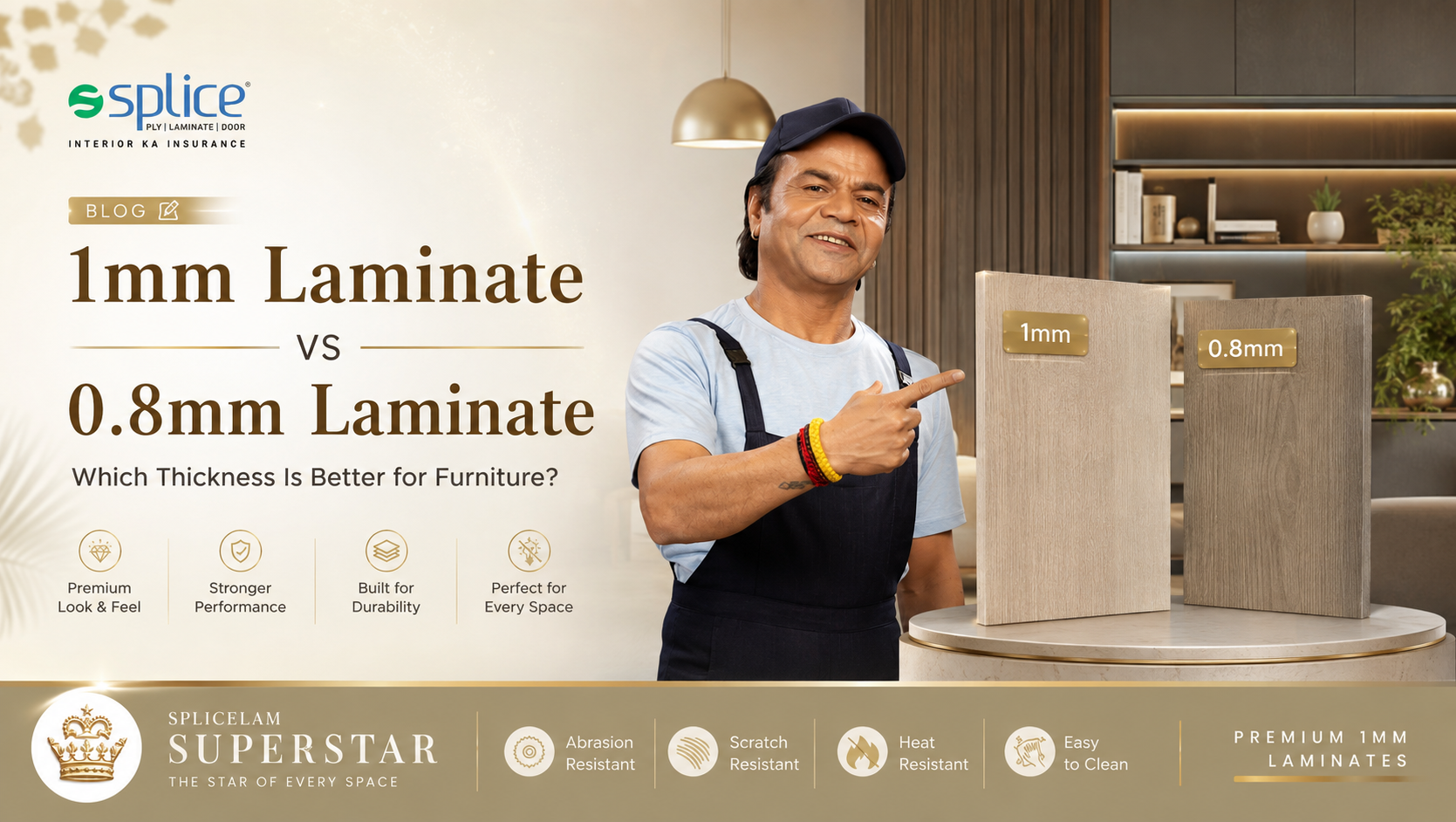
Compare 1mm laminate vs 0.8mm laminate for furniture, wardrobes and kitchens. Understand thickness, applications, cost, and selection factors.
Choosing between a 1mm laminate and 0.8mm laminate may seem like a small decision because the numerical difference is only 0.2mm. In furniture manufacturing, however, laminate thickness is one of several factors that can influence the final surface, application suitability and overall project budget.
Neither option is automatically better for every project. A wardrobe shutter, modular kitchen, office workstation and decorative wall panel can have different requirements.
For furniture where you are specifically considering the thicker option, explore the Splice Ply 1mm laminate collection before finalising your surface.
A 1mm laminate is a decorative surface sheet with a nominal thickness of one millimetre. It is generally bonded over plywood, MDF, particle board or another compatible substrate.
The laminate is responsible for the visible finish of furniture. It can provide wood, stone, solid-colour, matte, gloss or textured aesthetics depending on the selected design.
Splicelam's Superstar Premium 1 MM Series includes woodgrains, stone designs, colours, high-gloss surfaces and speciality textures for residential and commercial applications.
A 0.8mm laminate performs the same basic decorative function but has a comparatively thinner profile.
It can be suitable for general furniture surfacing and projects where the application, fabrication specification and budget do not require a 1mm sheet.
The important point is that laminate thickness should not be evaluated independently. The plywood or board underneath, adhesive quality, pressing method, edge finishing, and workmanship also affect the finished furniture.
For a broader understanding, read the Splice Ply laminate sheet thickness guide. Splice's existing thickness guide specifically discusses common laminate thicknesses and their use in interiors.
| Factor | 1mm laminate | 0.8mm laminate |
|---|---|---|
| Thickness | 1mm nominal | 0.8mm nominal |
| Typical consideration | Premium and frequently used furniture surfaces | General decorative furniture applications |
| Surface profile | Comparatively more substantial | Comparatively thinner |
| Cost consideration | May cost more depending on finish | Can be comparatively economical |
| Common applications | Kitchens, wardrobes, office furniture, commercial interiors | Furniture panels and general decorative applications |
| Selection basis | Application, design and expected usage | Application, design and project budget |
The Splice 1mm laminate product page similarly recommends selecting between thicknesses according to application, substrate, budget, finish and fabrication requirements rather than thickness alone.
For a wardrobe, consider the size of shutters, frequency of use, plywood thickness, edge treatment, finish and overall design.
A 1mm laminate is worth considering for wardrobe shutters and visible furniture surfaces where the project specification calls for a substantial decorative sheet.
The finish matters just as much as thickness.
For example:
If finish selection is your main concern, read the Splice Ply matte vs gloss laminate guide for bedroom wardrobes.
A kitchen puts furniture surfaces through regular handling, cleaning and exposure to changing indoor conditions.
For kitchen shutters, the laminate should be selected along with:
A thicker laminate cannot compensate for poor fabrication.
A 1mm laminate for kitchen cabinets can be considered where the furniture specification calls for a premium decorative surface. Splice's 1mm range includes wood, high-gloss, matte, stone and solid-colour options that can be shortlisted for kitchen cabinetry.
Not necessarily.
Furniture is a complete system. The laminate is only the visible surface.
The quality of furniture also depends on the substrate underneath it. Poor-quality or uneven boards can result in problems even when an expensive decorative finish is used.
This is particularly important for wardrobes, large shutters and cabinetry.
Read the Splice Ply guide on best plywood thickness for wardrobes, shelves and shutters before finalising the furniture structure.
Choose based on the application rather than selecting purely by price or thickness.
Consider a 1mm laminate when:
A 0.8mm laminate can be considered when:
The most reliable approach is to compare samples, review the complete sheet pattern and confirm the laminate specification with the furniture manufacturer.
The Splicelam Superstar collection includes wood, stone, colour, gloss, matte and speciality finishes.
You can explore Splice 1mm laminate sheets, browse the broader Splice laminate collection or check the Splice catalogues before selecting a design.
Neither is universally better. A 1mm laminate may be considered for premium and frequently used furniture surfaces, while 0.8mm may suit general decorative applications. Application, substrate, fabrication and budget should determine the final choice.
Yes, 1mm laminate can be considered for wardrobe shutters and other visible furniture surfaces when applied over a suitable substrate with correct fabrication.
Yes. 0.8mm laminate can be used for suitable decorative furniture applications depending on the design and furniture specification.
It may, but price is affected by the design, finish, brand, sheet dimensions, quantity and dealer pricing rather than thickness alone.
There is no universal thickness for every kitchen. Consider the substrate, shutter construction, usage, finish, fabrication and budget. A 1mm decorative laminate is one option for premium kitchen cabinetry.
 1mm Laminate Sheet Price: What Affects the Cost Before You Buy?
 1mm Laminate Designs for Modern Interiors: Wood, Stone, Matte and High Gloss
 How to Choose 1mm Laminate for Kitchen Cabinets: Finish, Colour and Usage Guide
 Best 1mm Laminate for Wardrobes: Matte, Gloss, Wood or Solid Colours?
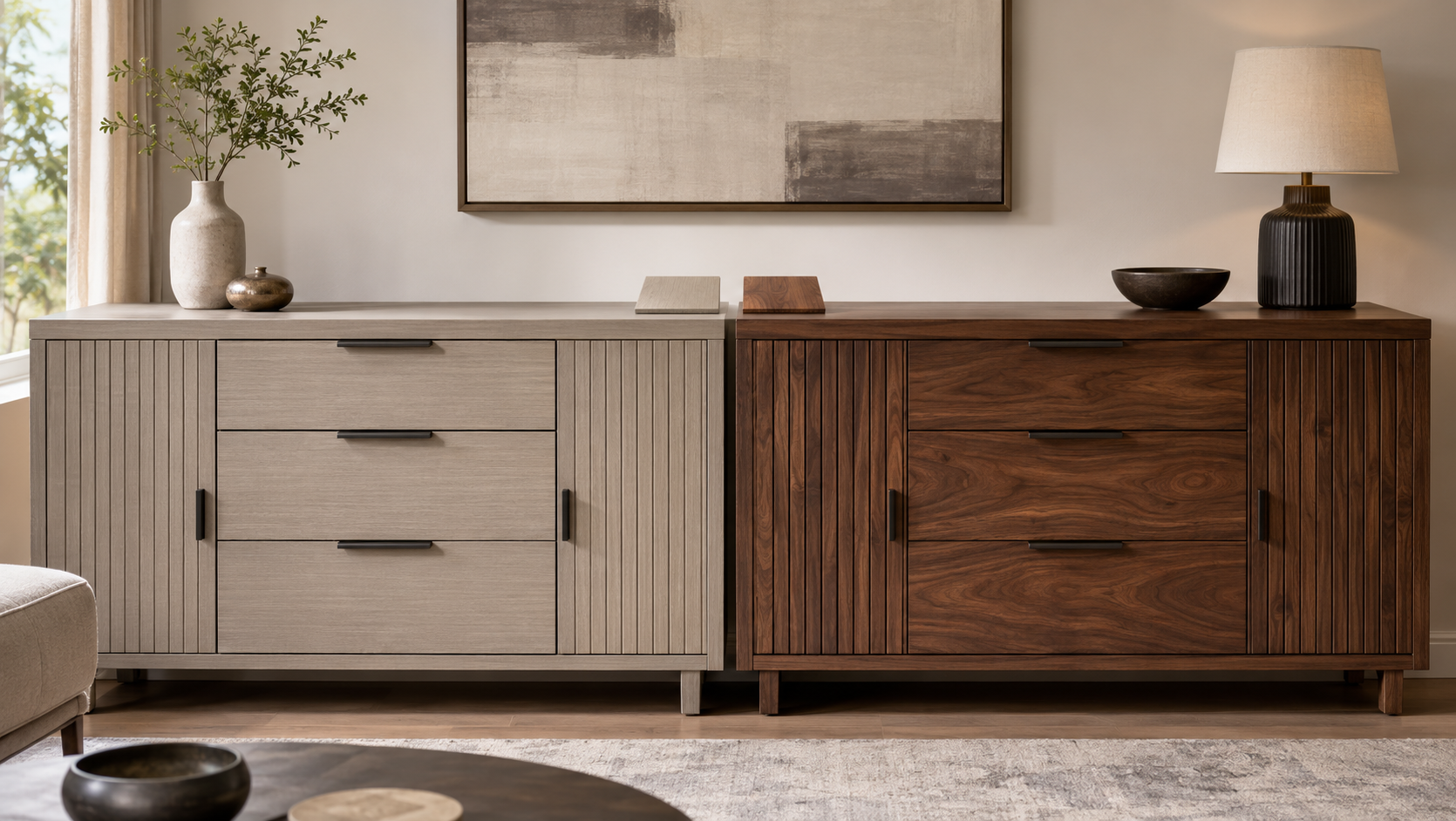 Laminate vs veneer: Which finish is better for furniture?
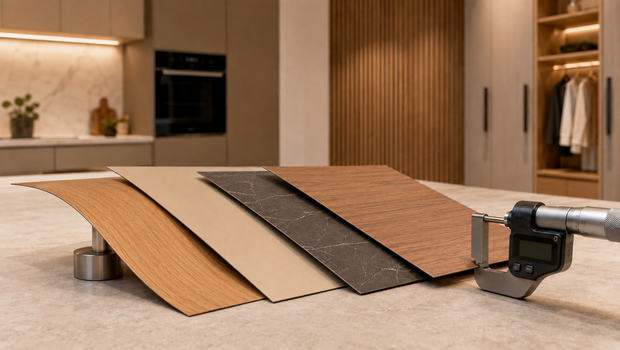 Laminate sheet thickness guide: 0.8 mm, 1 mm and more
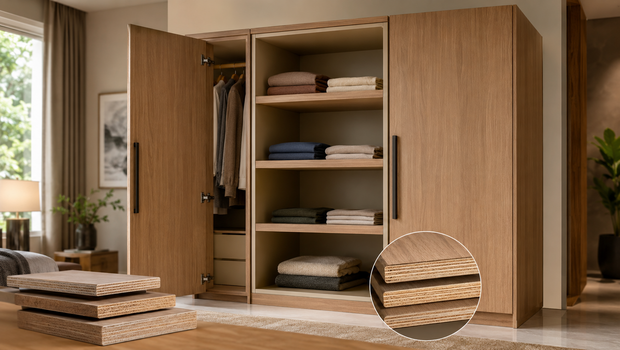 Best plywood thickness for wardrobes, shelves and shutters
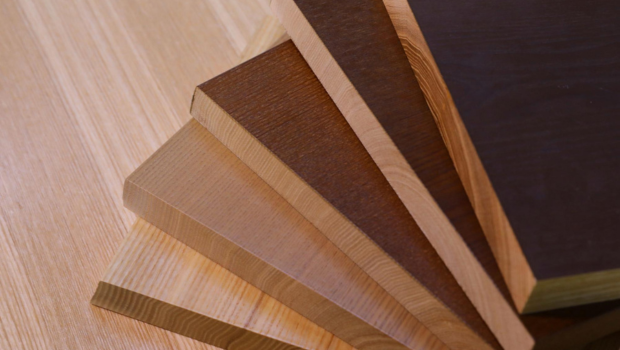 Plywood vs MDF for kitchen cabinets: Which is better?
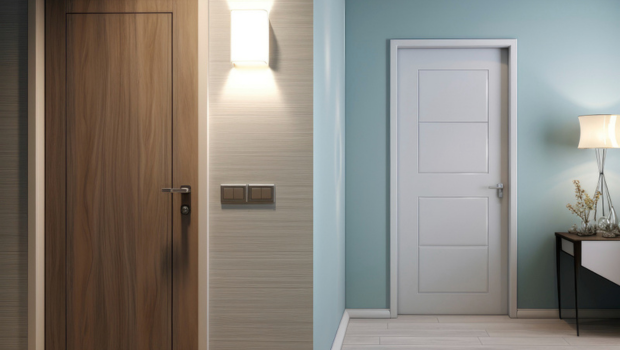 Modern Laminated Doors: Finish, Edge, Core and Maintenance Checklist
.png) Shuttering Plywood Buying Guide: Strength, Reuse, Thickness & Cost Factors
Shuttering Plywood Buying Guide: Strength, Reuse, Thickness & Cost Factors