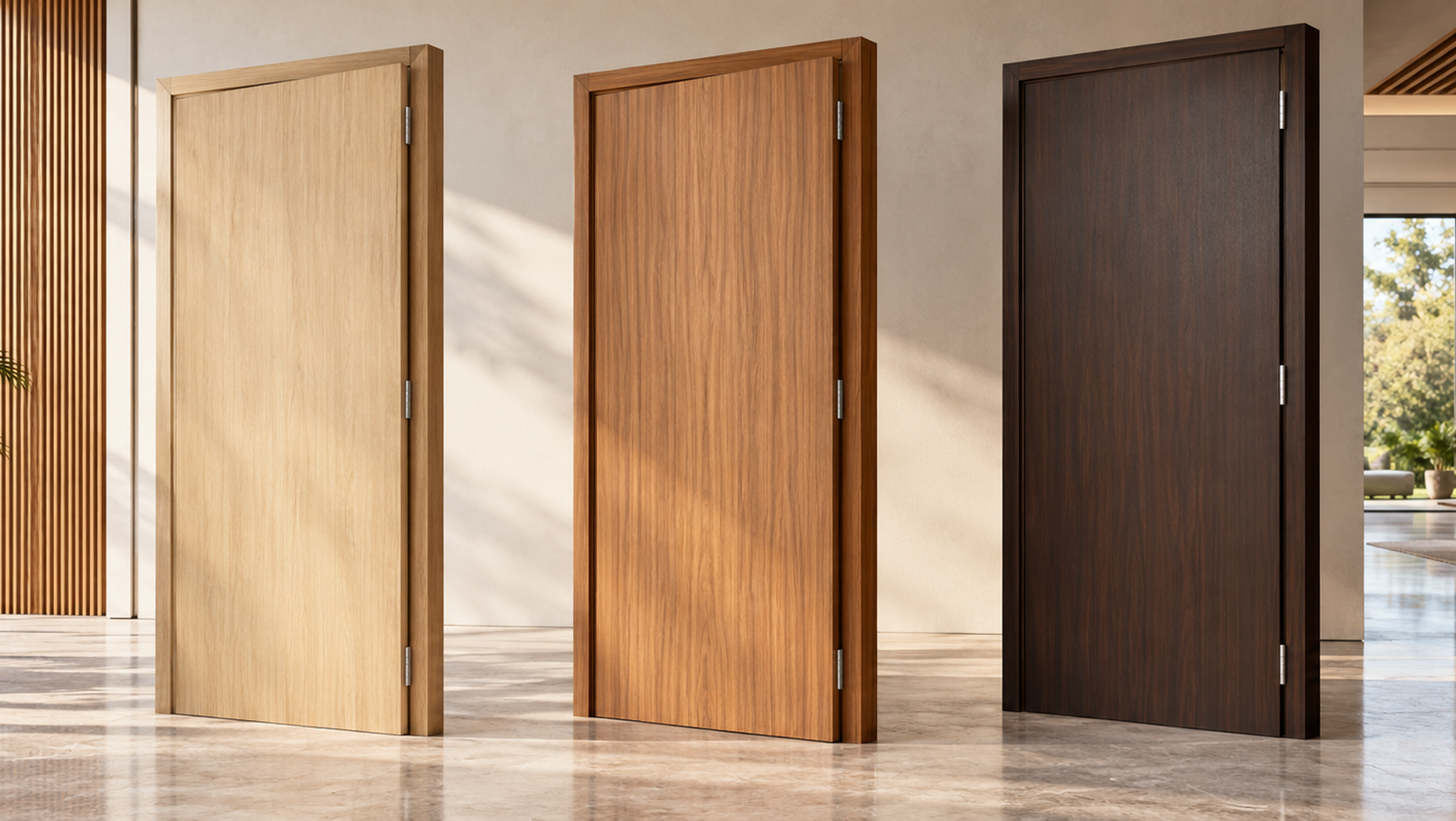
Posted on October 19, 2026
Explore ten Indian flush-door suppliers with public product information and learn how to compare core, size, finish, frame, and installation.
If you search for a top 10 flush door manufacturer in India, you will see names repeated in different orders. That order rarely tells you which door will fit your opening, stay flat in your room or accept the hardware you plan to use. Flush doors can look almost identical in photographs while their cores, edge construction, finishing and documentation differ.
The ten companies below are an unranked research shortlist. Splice Ply appears first because this guide is published for its site; the other companies follow alphabetically. Each has public information about flush doors or flush-door-based products on its own website. Inclusion does not mean that one company outperforms another, nor that every product in its range suits every location. Confirm current models, specifications and delivery in your area before ordering.
Splice Ply. The Splice flush-door range sits alongside membrane, laminated and other door categories. Identify the specific leaf, finish and frame arrangement you need before requesting a quote.
Archidply. The company’s door range includes a flush-door category. Ask the dealer for the exact leaf construction and finish proposed, not just the corporate brand.
CenturyPly. The CenturyDoors flush-door collection shows current options. Compare the named model, dimensions and stated use with the room schedule.
Dormak. Its door range includes flush-door constructions and finished variants. Ask how the core and lock reinforcement differ between options, especially for heavy hardware.
Duroply. The company’s published portfolio includes flush doors. Request the current model sheet and local stock details because a portfolio summary may not describe the exact leaf available today.
Greenply. Its door catalogue identifies several flush-door lines. Match the specific product to the room’s exposure and your desired finish rather than treating all lines as equivalent.
Jyothi Interiors. The company site lists flush doors among its manufactured and supplied categories. For a bulk project, confirm the sample approval, dimensions and lead time in writing.
Pravesh Doors. Its company overview identifies flush doors among its manufactured products. Check whether the quoted leaf is unfinished, decorative or part of a complete frame-and-hardware package.
Radium Ply. Its flush-door page gives construction and test information. Ask for the current documentation applicable to the particular product offered for your project.
Xen Ply and Doors. Its door page describes flush-door construction and related finishes. Confirm product availability, size and hardware preparation for your location.
This shortlist is deliberately not labelled “best to worst.” No single public test set compares all ten current products under identical conditions. Use it to find candidates, then compare one specified door from each.
A flush door has a plain face, but that does not define its entire construction. Ask what fills the core, what forms the stiles and rails, how the face is bonded, and what finish is supplied. A bedroom door may primarily need privacy and a consistent decorative finish. A frequently used office door may need robust hinge and closer details. A bathroom-adjacent door must be assessed for humidity and edge protection.
Do not assume a decorative finish makes a door waterproof. A laminate face may be easy to wipe, while unprotected top, bottom, lock cut-outs or hinge recesses remain vulnerable. The frame and threshold details matter too. If the project has a formal fire or acoustic requirement, specify an approved assembly for that requirement rather than assuming an ordinary flush door can be upgraded later with a seal or closer.
The Splice Ply door-frame and window range provides frame options to consider, but the chosen section must match the leaf thickness, wall depth and hardware. Measure the opening after the relevant civil work, and record the finished floor level before fabrication.
Ask every supplier to quote the same fields: leaf model, core construction, thickness, width and height, face finish, edge treatment, frame, hardware preparation, quantity, transport and installation. State whether tax is included. If one price looks much lower, check whether the door is unfinished or whether the frame and hardware have been left out.
Request a physical sample of the face and edge. Look for finish consistency, straight edges and a clean bond at any visible detail. Check the proposed leaf against the frame sample. A showroom piece can demonstrate appearance, but an approved project sample should reflect the construction and finish that will be delivered.
For a building with many doors, use a door schedule. Give every opening a unique number and record its handing, width, height, frame type, finish and hardware set. One mistaken swing direction repeated across a floor can cost more than a small difference in leaf price. Ask who will confirm site measurements and who can approve a change after production begins.
If the leaf is supplied unfinished, agree who will laminate, veneer or paint it, how both faces will be treated and how the edges will be sealed. A factory-finished leaf may reduce site work, but its finish must be available in the required size and quantity. If the design uses a strong woodgrain, approve orientation before cutting or hanging.
Hardware is not a last-minute accessory. Hinge positions, latch backset, lock height and closer requirements should be checked against the manufacturer’s allowed preparation. A heavily drilled leaf may need reinforcement in the right places. Request written guidance before trimming or enlarging a cut-out on site. A carpenter may be able to make a door fit physically while unintentionally weakening the finish or voiding the warranty.
In a renovation, keep the old door until the new assembly has been measured and checked. An existing leaf can reveal the preferred swing and hardware location, but it is not a reliable template for a new frame: walls may have moved, flooring may be thicker and the previous installer may have trimmed it unevenly. Measure the opening independently. If the replacement must match nearby doors, take an approved finish sample to the site and compare it at eye level. Small differences in sheen become more obvious when two doors face each other across a corridor.
1. Which named flush-door model is this sample, and what is inside it?
2. What sizes and thicknesses are currently available for my order?
3. What frame and hardware arrangement is approved for this leaf?
4. Which surfaces and edges are factory finished, and which need site work?
5. What are the written terms for damage, replacement and warranty?
If the salesperson cannot answer immediately, ask them to confirm with the manufacturer. A clear answer after a call is better than a confident guess. Keep the brochure or technical sheet for the exact model with your purchase documents.
On a larger project, install and approve one door before fitting the entire batch. Open it fully. Check that it does not scrape the floor, that it latches without force and that the finish at the top and bottom matches the approved detail. Look at the gap around the leaf and the fit of the hardware. Record adjustments before repeating the installation method elsewhere.
The manufacturer shortlist helps you start a conversation; the installed sample tells you whether the chosen assembly works in your building. With a clear door schedule and an exact product code, you can compare the ten options fairly and buy the door that fits the project, not merely the most familiar name. To discuss a particular Splice option, review the Splice door range and request its current model specification and local availability.
 How to Choose a 1 mm Laminate Manufacturer in India for Repeatable Results
 How to Compare a Laminate Manufacturer and Supplier in India
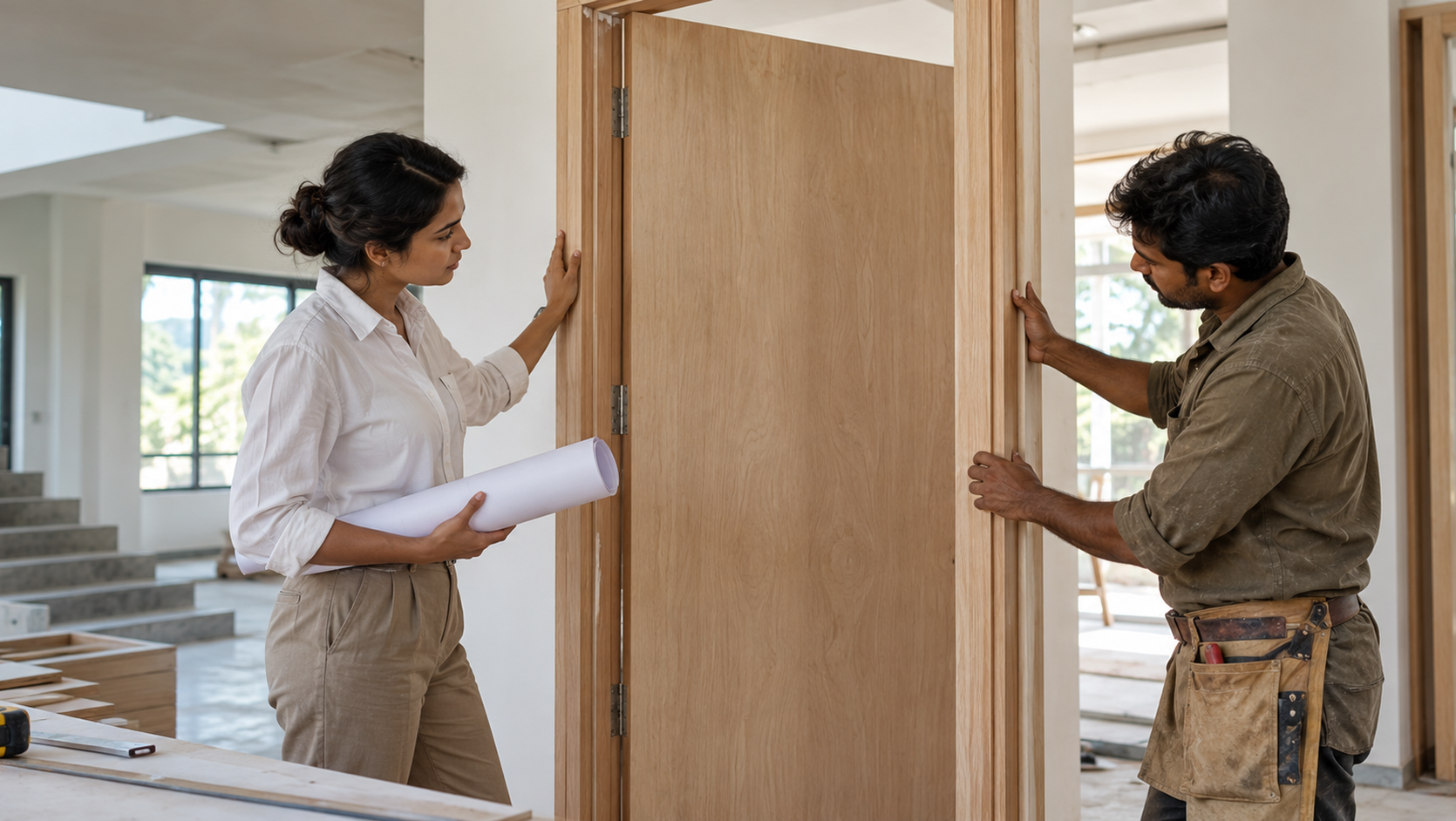 Choosing a Top Door Manufacturer in India Starts with the Door Schedule
 How to Choose a Top Plywood Manufacturer in India for a Real Project
 Top 10 Plywood Companies in India to Research Before You Buy
 Acrylic vs Laminate: Cost, Finish, Durability and Best Uses
 Modern Laminated Doors: Finish, Edge, Core and Maintenance Checklist
.png) Ply Manufacturer in India: Factory, Testing and Product Quality Checklist
 Door Manufacturer in India: Questions Architects and Builders Should Ask Before Ordering
.png) Calibrated Plywood Thickness Tolerance for CNC and Modular Furniture