Posted on October 19, 2026
Compare laminate makers and suppliers in India using samples, product codes, thickness, finish consistency, stock and fabrication needs
The phrase top laminate manufacturer and supplier in India sounds like a single search, but it hides two jobs. A manufacturer makes the decorative sheet and defines its technical range. A supplier must get the right design, thickness, batch and quantity to your workshop when you need it. A project can fail at either point: the chosen laminate may be unsuitable for the application, or a suitable product may arrive in inconsistent finishes or too late for fabrication.
This guide is for homeowners, interior designers and furniture makers choosing laminates for cabinets, wardrobes, wall panels or retail fixtures. It gives you a way to compare actual products and the service behind them, rather than relying on a broad “best brand” claim.
Start with the application. A wardrobe shutter in a dry bedroom, a kitchen cabinet front and a retail counter face experience different cleaning, contact and light conditions. Note whether the surface is horizontal or vertical, whether children or customers will touch it frequently, and whether it is next to heat or moisture. The laminate is a decorative surface, not a substitute for a sound substrate or proper edge protection.
Write the desired appearance separately from performance. You might want a warm oak grain, a low-gloss solid colour or a stone-inspired pattern. Then decide what matters in everyday use: scratch visibility, wipe-clean behaviour, fingerprint show-through, pattern continuity or repairability. Dark high-gloss surfaces can look striking in a sample and still show daily marks more readily than a textured or matte alternative in a busy kitchen.
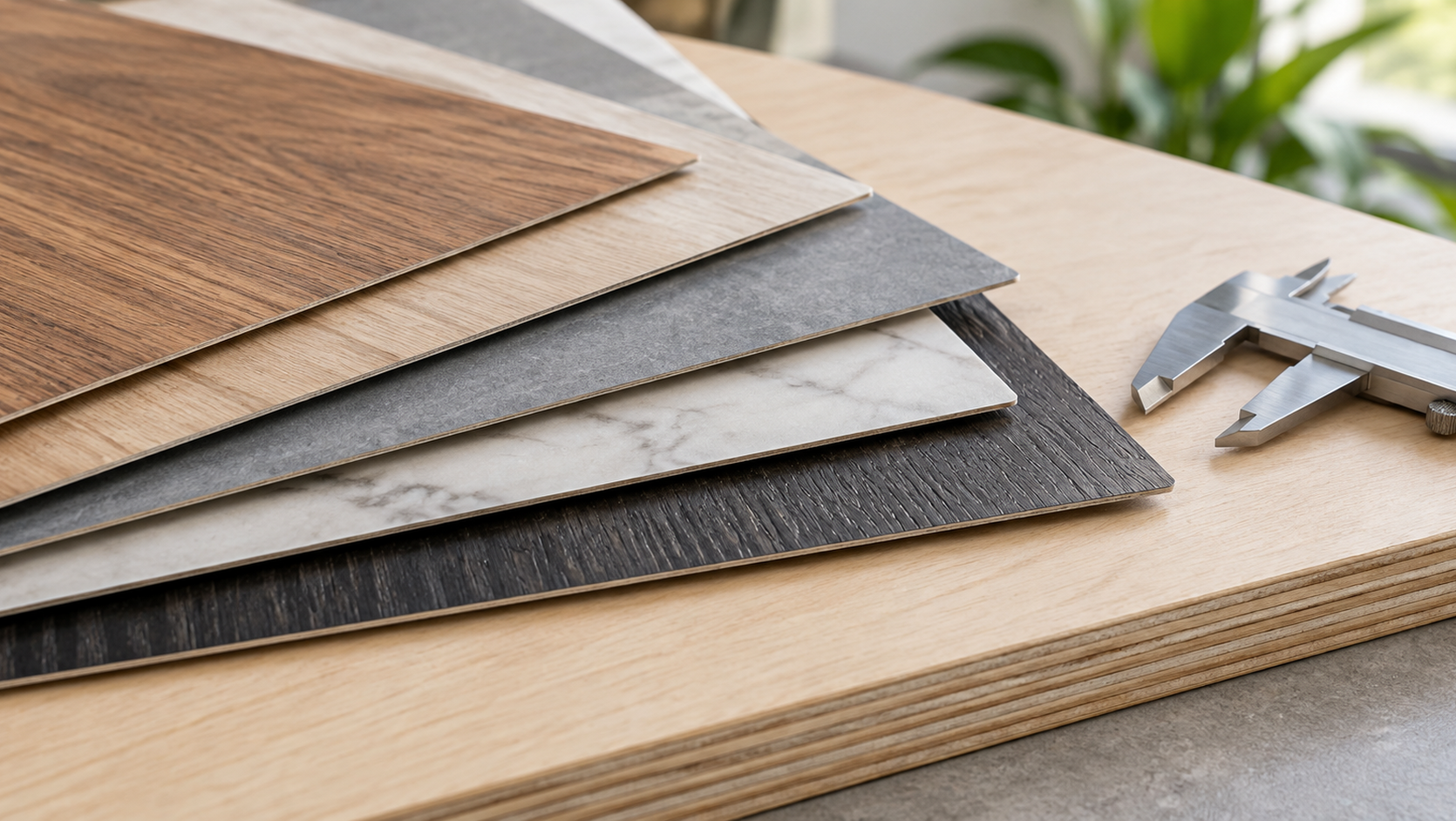
Splice Ply’s 1 mm laminate collection offers several decorative directions. Treat the website as a catalogue to narrow the search, then inspect a physical sample under the lighting in the actual room. Screens and showroom lights are not reliable colour references.
Ask for the design code, finish code, nominal thickness and sheet size of each shortlisted laminate. “Woodgrain laminate” is too vague for ordering or replacing a damaged panel. Some collections use similar design names across different textures or thicknesses; the complete code matters.
Request the current technical and care information for the exact product. Ask whether the sheet is intended for the proposed substrate and fabrication process. Discuss adhesives, pressing, trimming and edge finishing with the workshop. A decorative sheet that is poorly pressed to a damp or uneven board can lift, bubble or telegraph defects. The quality of the final cabinet depends on the entire panel assembly.
If the project needs a specific fire, hygiene or other performance claim, request documentary evidence applicable to the exact laminate and installation. Do not assume a claim made for one product family covers every design sold by the same company. Have the project professional review any mandatory requirement before purchasing.
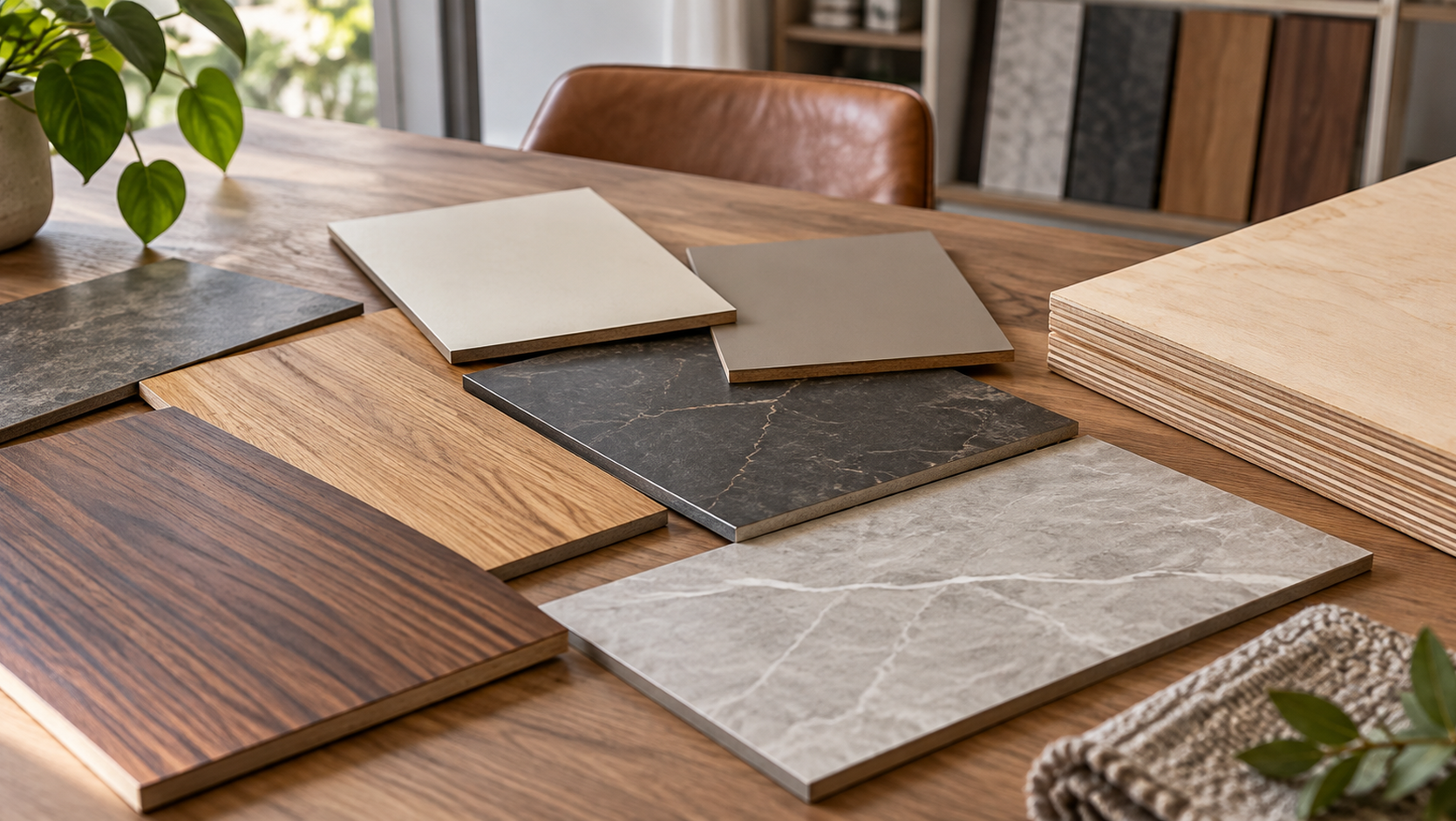
A small swatch can hide the pattern repeat and sheen of a full sheet. Ask for a larger sample or an installed reference if the laminate will cover a long wardrobe or wall. Hold it vertically and horizontally. Look at it in daylight and under the room’s evening lighting. Put it next to flooring, paint, door finishes and edge-banding samples.
For woodgrain, decide the direction on every shutter before ordering. A sheet may have enough area for the parts but still create waste if the grain must run continuously across adjacent doors. For a solid colour, compare separate sheets side by side. Record the approved physical sample and its code; a photograph alone will not settle a colour disagreement after delivery.
If a design has a directional texture, mark the direction on the cutting list. A cabinet with one reversed door may be obvious only after it is installed. The cutting plan also determines how many sheets you need. Ask the fabricator to nest the actual parts on the stated sheet size; dividing total panel area by sheet area ignores grain, trimming and damaged offcuts.
Ask whether the quantity is in stock now, whether all sheets can come from the same batch and how a later replacement would be sourced. Record the promised lead time and delivery address in writing. If the design is a limited run, discuss a sensible spare quantity with the fabricator rather than discovering after installation that one damaged shutter cannot be matched.
Inspect delivery before cutting. Check the labels against the purchase order, count sheets, compare finish codes and look for damaged corners, surface marks or moisture exposure. Store laminates flat and dry according to supplier instructions. Do not lean large sheets against a wall for weeks and assume they will behave like rigid boards.
The supplier should be able to explain who handles a complaint and how quickly. Ask what evidence they need if the wrong product arrives. A useful answer names the contact, invoice details and time window for reporting damage. “We will take care of it” is reassuring but insufficient for a tight installation schedule.
For an office or retail rollout, ask whether the chosen design can be supplied in stages without losing consistency. A sample approved for the first branch should stay with the central project file, along with the full code and delivery notes. If a later location receives a visibly different finish, pause before fabrication rather than hoping the difference will disappear once installed. Project teams should decide who has authority to approve a substitution; the warehouse or site carpenter should not have to make that visual decision alone.
The lowest sheet price may not produce the lowest installed cost. Include transport, cutting waste, matching edge material, adhesive, pressing and rework risk. A cheaper finish with poor stock continuity can be costly when a project needs extra sheets weeks later. A premium design may also be unnecessary for hidden cabinet interiors where a different finish is specified.
Ask the workshop for a panel-by-panel quantity estimate, not a rough floor-area calculation. Separate each finish code. Note which faces require decorative laminate and which need balancing or a different reverse surface. Check sheet dimensions against the actual cutting layout. If the price comparison changes with quantity, ask the supplier to identify the exact threshold and whether the order must be taken in one delivery.
Maintenance belongs in this calculation too. Ask for the cleaning advice for the selected surface and decide whether it suits the household or workplace. A textured finish may hide fingerprints but hold grime in a deep pattern; a high-gloss surface may wipe clean quickly but show fine scratches under strong light. Neither trade-off makes one finish universally better. Compare the sample after ordinary handling, not just while it is untouched in the display rack. For a kitchen, check how the chosen finish looks near handles and the sink, where people touch it most often.
You can keep the decision on one page:
1. Product fit: Does the named laminate suit the room, surface and substrate?
2. Sample match: Does the approved physical sample look right in the room?
3. Technical information: Are thickness, sheet size and care requirements clear?
4. Supply: Are the design, quantity, batch and replacement plan realistic?
5. Installed cost: Does the quote include the materials and work the furniture actually needs?
Mark any item that needs written confirmation. A beautiful sample should not override a missing product code, and a quick delivery should not override an unsuitable construction.
Put the approved design code and finish on the furniture drawings. Give the fabricator a physical sample, grain-direction marks and an edge-detail drawing. Agree who may approve substitutions. If stock changes, compare a new sample with the original before production resumes; similar catalogue names do not guarantee a visual match.
The strongest laminate manufacturer-and-supplier combination is the one that gives you a suitable sheet and a dependable path from sample to installed panel. Explore Splice Lam for current options, then confirm the exact code, availability and fabrication requirements with the supplier handling your order.
 How to Choose a 1 mm Laminate Manufacturer in India for Repeatable Results
 Top 10 Flush Door Manufacturers in India to Put on Your Shortlist
 Choosing a Top Door Manufacturer in India Starts with the Door Schedule
 How to Choose a Top Plywood Manufacturer in India for a Real Project
 Top 10 Plywood Companies in India to Research Before You Buy
 Acrylic vs Laminate: Cost, Finish, Durability and Best Uses
 Modern Laminated Doors: Finish, Edge, Core and Maintenance Checklist
.png) Ply Manufacturer in India: Factory, Testing and Product Quality Checklist
 Door Manufacturer in India: Questions Architects and Builders Should Ask Before Ordering
.png) Calibrated Plywood Thickness Tolerance for CNC and Modular Furniture