Posted on October 19, 2026
Use a practical project scorecard to compare plywood manufacturers in India on grade, samples, traceability, delivery and after-sales support.
A glossy catalogue can make every brand look like the top plywood manufacturer in India. A construction site asks a harder question: will the specified sheet arrive in the correct grade and thickness, in time for fabrication, with enough documentation to resolve a problem later? That question matters more than a national superlative.
This guide is for homeowners, architects and furniture makers who need to choose a manufacturer for a particular order. It does not declare one company the best in every category. Instead, it walks through a short evaluation that you can repeat for a bedroom wardrobe, modular kitchen or commercial fit-out.
Begin with a component schedule. Separate cabinet carcasses, shutters, shelves, drawer bottoms, wall panels and wet-area bases. Note the width, span, load, finish and exposure for each. One plywood grade rarely makes equal sense everywhere. The project may need a moisture-resistant board for dry rooms and a different, properly specified product where splashes or humidity are routine.
Ask the designer what the finished construction needs, not simply what thickness the carpenter usually buys. A tall shutter may need careful control of flatness and hinge location. A long shelf can deflect even when its plywood is sound; support and span are part of the design. A routed profile or CNC system may need tighter thickness consistency than a simple partition. For a useful example, read Splice Ply’s article on calibrated plywood thickness and CNC furniture.
Once the components are clear, prepare a one-page request for quotation. Include the named product or required performance, nominal thickness, sheet size, quantity, finish, delivery address and date. Suppliers can then quote the same job. Without this step, the cheapest response may simply be for a different board.
Manufacturer, brand, distributor and retailer are not identical roles. A brand may sell several categories; a dealer may stock only some of them; a specific product may be made at a different facility from another line. Ask who will issue the invoice and warranty, who can answer a technical query and whether the sheet can be traced by label or batch information.
Request current documentation for the exact product. The useful pack may include the technical sheet, applicable standard, grade claim, handling advice and written warranty terms. Do not treat a generic corporate brochure as proof that every sheet carries every performance claim on its website. If a supplier says a product has a particular certification, ask for the certificate or licence details relevant to that model and period.
This is especially important when project specifications call for a grade or test. A salesperson’s shorthand such as “marine quality” is not a substitute for a named product and its formal designation. The correct standard, edition and evidence depend on the product and intended use; have the project professional confirm any mandatory requirement.
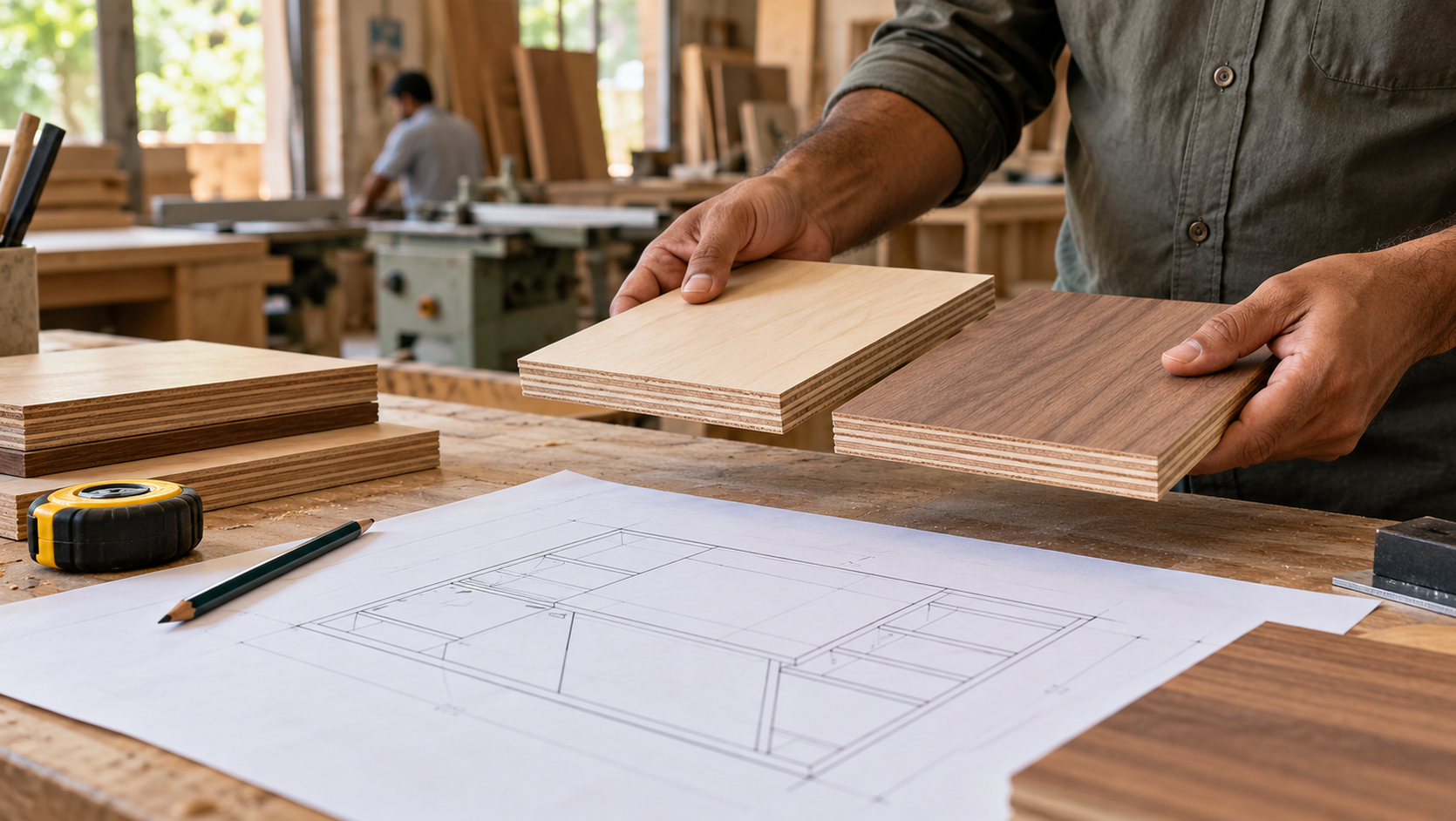
A small sample lets the fabricator see the face, core and edge. Check whether the face is suitable for the selected laminate or veneer, whether the sheet is acceptably flat and whether visible edge voids or overlaps cause concern. Measure thickness at several locations. If a supplier provides only a tiny showroom chip, request a larger sample from the line you intend to order.
Do not overinterpret a home test. Briefly soaking a scrap in a bucket does not reproduce a recognised laboratory test, and a single screw driven into one offcut does not establish a product’s full strength. Use workshop checks to spot obvious fit and finish issues, then rely on appropriate documentation for performance claims. Keep an approved sample with the purchase order so delivery can be compared with what was selected.
Ask whether the product is available in the required sheet size and thickness, whether the quantity can come from the same line or batch, and how long a replacement would take. A reliable manufacturer may have excellent products but limited stock of the exact grade in your city. That can stop a project just as surely as a quality problem.
Plan for transport and storage. Sheets should be protected from rain, supported flat and handled without damaging corners. Confirm who checks the delivery at the site and how quickly a discrepancy must be reported. Photograph labels and visible damage before the sheets are cut. The Splice Ply plywood collection offers several lines, but the project team should confirm the current specification and stock of its chosen item rather than assuming the entire range is interchangeable.
For a large order, ask whether the supplier can provide the same specification for later phases. If the project includes multiple apartments, hotel rooms or retail branches, repeatability matters. A late substitution with a slightly different thickness or face quality can upset CNC settings, surface matching and installation schedules.
The price per sheet is only one number. Add delivery, handling, cutting yield, wasted offcuts, finishing requirements and the cost of delays. A larger sheet may reduce joints and waste in tall panels. A more consistent panel may reduce fitting time. On the other hand, paying for an exposure grade far above the room’s needs can use budget that would be better spent on sound hardware or edge finishing.
Request two quotations in the same format. State whether tax and transport are included. Ask for lead time and payment terms in writing. If the difference between two brands appears surprisingly large, verify that both quotes refer to the same grade, thickness and sheet size. If the scope is not equal, the price comparison is misleading.
Take these questions into a call with a shortlisted supplier:
1. Which named product matches our component schedule and why?
2. Which technical document supports its grade and performance claims?
3. Can we inspect a representative sample before ordering?
4. What sheet sizes and thicknesses are in stock for our delivery date?
5. How will the delivered product and batch be identified?
6. Who handles a damage, mismatch or warranty concern, and within what time?
7. What change would you recommend if the location becomes wetter or the span increases?
Notice the last question. A useful supplier can explain the limits of a proposed panel, not merely repeat its benefits. Clear limitations are a sign that the product is being specified rather than pushed.
Plywood is only the base of a finished component. Adhesive, decorative surface, hardware, edge treatment and installation all influence how furniture behaves. A moisture-resistant core with unsealed plumbing cut-outs can still be damaged. A well-made board can bow if a large shutter is finished unevenly or stored badly before hanging. Ask the fabricator to describe the complete assembly.
For a kitchen, discuss edge sealing around sink and hob openings, ventilation and the method for mounting the unit away from persistent floor moisture. For a wardrobe, look at shelf span, back-panel fixing and hinge reinforcement. In a shop fit-out, discuss repeat orders and repairability. These questions create a specification that can be checked after delivery.
Write down the selected product, intended components, approved sample, grade, thickness, sheet size, quantity and supplier contact. Keep the technical document and invoice with the project file. If a substitute is proposed, require a comparison against those same fields and approval before cutting begins.
The “top” plywood manufacturer for your project is the one whose documented product fits the job and whose supply chain can consistently deliver it. If you are considering Splice Ply, use its plywood range as the starting catalogue, then request the current data and local availability for the precise product you intend to specify. That final check is more valuable than a generic badge or an untested ranking.
 How to Choose a 1 mm Laminate Manufacturer in India for Repeatable Results
 Top 10 Flush Door Manufacturers in India to Put on Your Shortlist
 How to Compare a Laminate Manufacturer and Supplier in India
 Choosing a Top Door Manufacturer in India Starts with the Door Schedule
 Top 10 Plywood Companies in India to Research Before You Buy
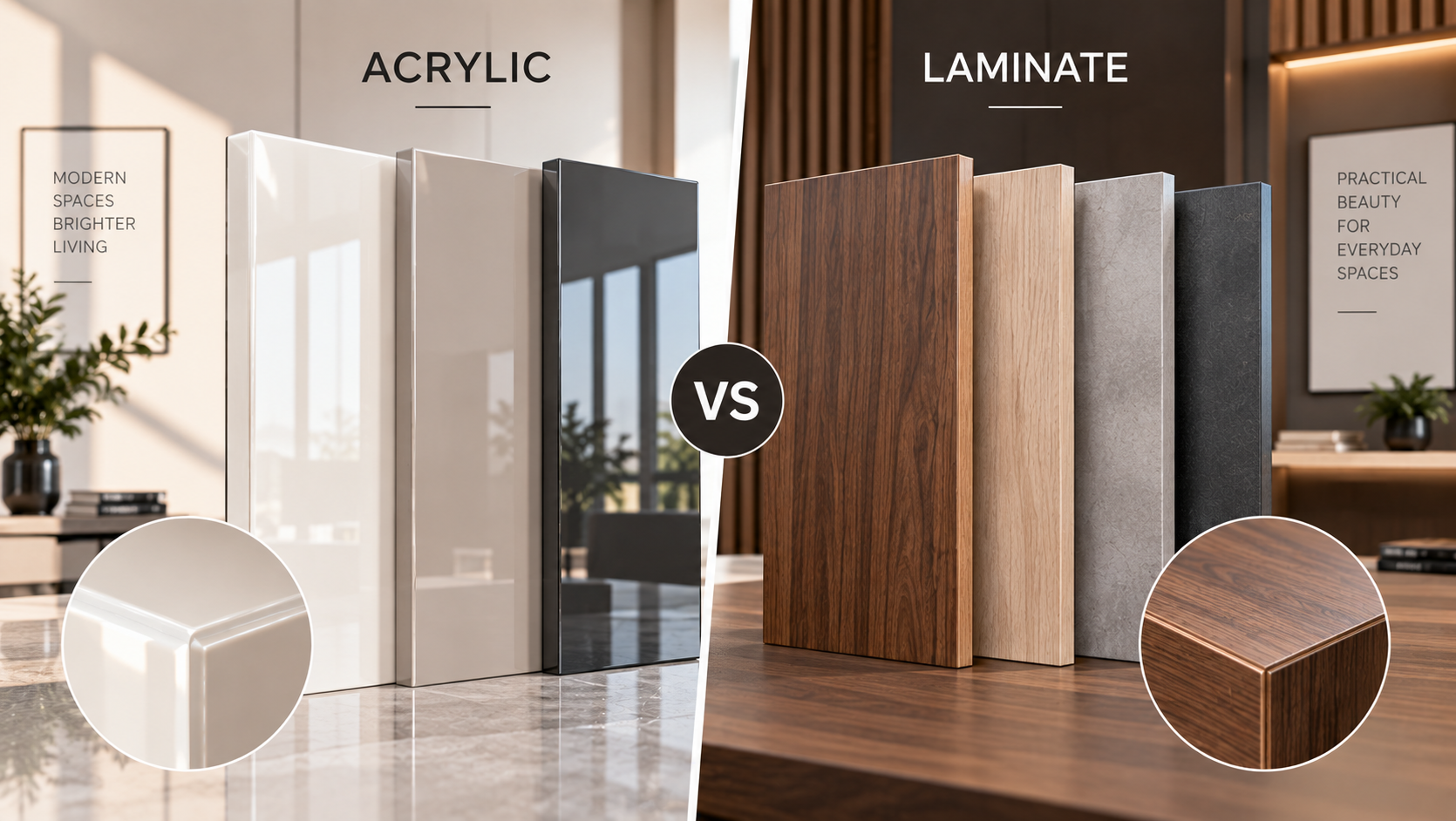 Acrylic vs Laminate: Cost, Finish, Durability and Best Uses
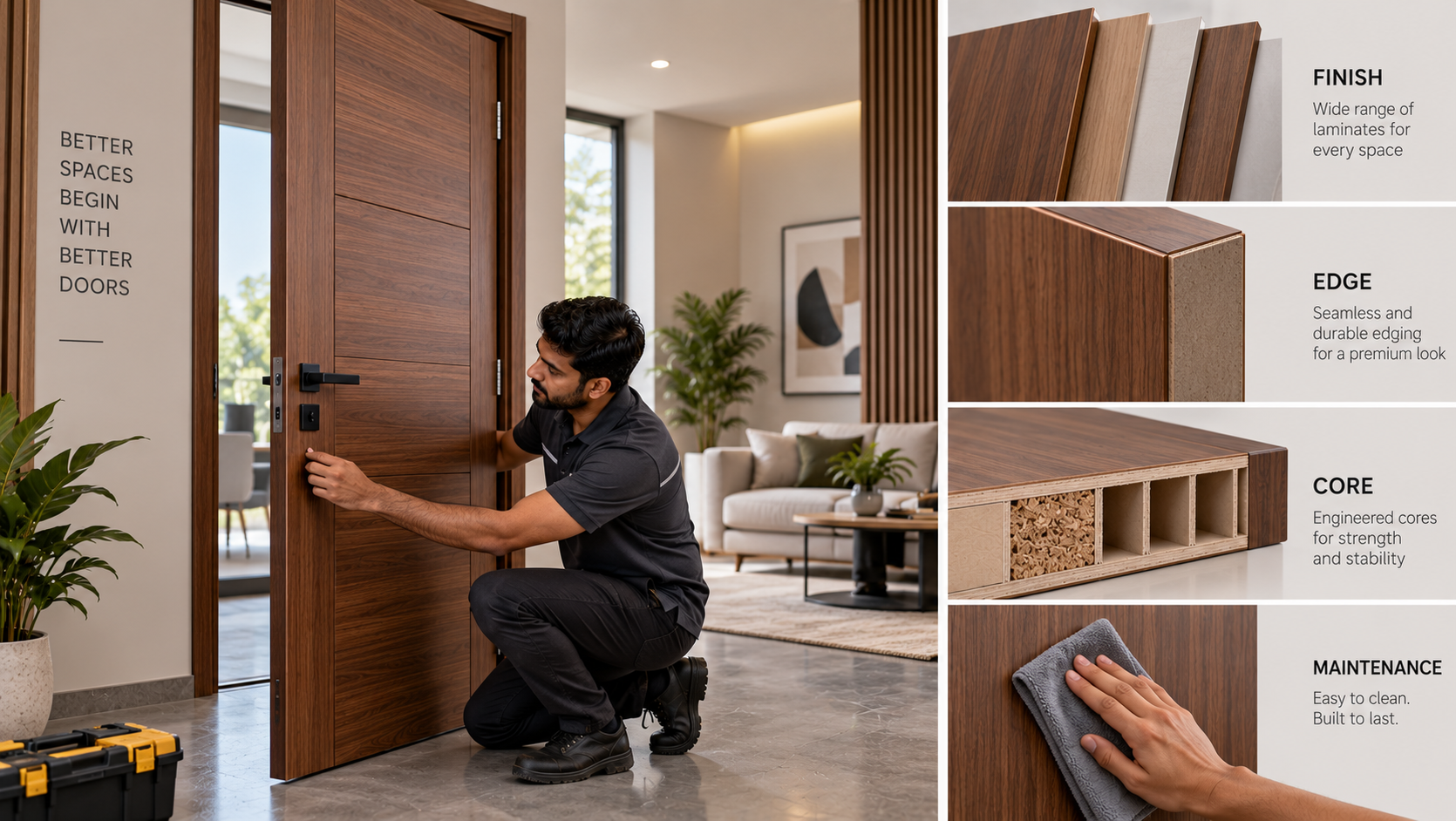 Modern Laminated Doors: Finish, Edge, Core and Maintenance Checklist
.png) Ply Manufacturer in India: Factory, Testing and Product Quality Checklist
 Door Manufacturer in India: Questions Architects and Builders Should Ask Before Ordering
.png) Calibrated Plywood Thickness Tolerance for CNC and Modular Furniture